
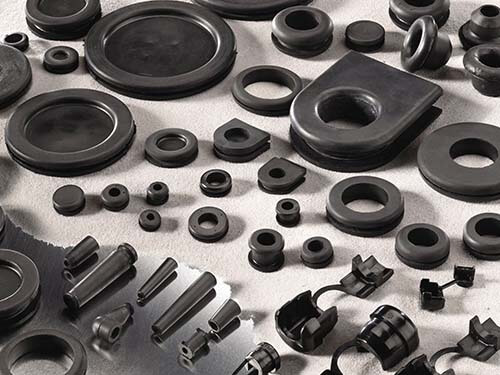
Molded EPDM Rubber Parts: High-Performance Solutions for Industrial and Commercial Applications
EPDM Molded Rubber Parts
Molded EPDM rubber parts refer to custom-engineered components manufactured using ethylene propylene diene monomer (EPDM) rubber, shaped through precision molding processes. These parts are designed to meet specific dimensional, functional, and performance requirements across diverse industries, leveraging EPDM’s unique material properties to deliver reliability in demanding environments.
Material
Ethylene Propylene Diene Monomer (EPDM) Rubber. At the core of these parts is EPDM, a synthetic elastomer renowned for its exceptional balance of flexibility, durability, and chemical resistance. Composed primarily of ethylene, propylene, and a small percentage of non-conjugated dienes (e.g., ethylidene norbornene), EPDM is classified as a terpolymer—a polymer formed from three distinct monomers. This chemical structure endows it with a set of properties that make it irreplaceable in countless applications:
– Saturated Backbone: Unlike natural rubber or styrene-butadiene rubber (SBR), EPDM’s polymer chain is largely saturated (few double bonds), rendering it highly resistant to oxidation, ozone, and ultraviolet (UV) radiation. This saturation is the foundation of its long-term weatherability.
– Chemical Inertness: EPDM exhibits low reactivity with water, steam, alcohols, dilute acids, and alkalis, making it ideal for applications involving exposure to moisture or mild chemicals.
– Temperature Stability: Its amorphous structure allows it to maintain elasticity across an exceptionally wide temperature range, typically from -40°C (-40°F) to 150°C (302°F), with specialized formulations enduring short-term exposure up to 175°C (347°F).
– Compression Set Resistance: EPDM retains its shape and sealing ability even after prolonged compression, a critical trait for gaskets, O-rings, and seals that must maintain a tight fit over time.
– Electrical Insulation: The material’s inherent dielectric properties make it an excellent insulator, suitable for electrical components requiring protection from current leakage.
EPDM can be compounded with additives (e.g., carbon black for strength, plasticizers for flexibility, or flame retardants) to tailor its properties to specific needs, ensuring molded parts perform optimally in unique environments.
Core Features of Molded EPDM Rubber Parts
Molded EPDM rubber parts combine the inherent advantages of EPDM with the precision of molding, resulting in components that stand out for their:
1. Exceptional Weatherability and Ozone Resistance
One of EPDM’s most defining traits is its ability to withstand harsh outdoor conditions. Unlike many elastomers (e.g., natural rubber, which degrades rapidly in ozone), molded EPDM parts resist cracking, hardening, or brittleness when exposed to ozone, UV radiation, rain, snow, or extreme temperature fluctuations. This makes them ideal for long-term outdoor use, such as in automotive exterior seals, building facades, or outdoor electrical enclosures, where longevity is critical.
2. Broad Temperature Tolerance
Molded EPDM parts maintain flexibility and functionality in both frigid and high-heat environments. In cold climates, they resist stiffening, ensuring seals remain tight and gaskets retain their compressive force. In high-heat applications—such as engine bays, industrial ovens, or HVAC systems—they resist softening or melting, even under sustained exposure to 150°C. This versatility eliminates the need for material switching across seasonal or geographic boundaries, reducing maintenance costs.
3. Superior Water and Steam Resistance
EPDM is inherently hydrophobic (water-repellent) and resistant to steam, making molded parts ideal for applications involving moisture. Whether used as gaskets in washing machines, seals in hot water pipes, or O-rings in steam valves, these components prevent leaks and maintain integrity even after prolonged contact with water or high-pressure steam. This resistance extends to mild aqueous solutions, including detergents, which makes them popular in household appliances.
4. Excellent Elasticity and Compression Recovery
Molded EPDM parts exhibit high elasticity, allowing them to stretch, bend, or compress without permanent deformation. When subjected to repeated stress—such as the opening and closing of a car door or the vibration of industrial machinery—they quickly return to their original shape. This elasticity, paired with low compression set (typically <30% after 70 hours at 100°C, per industry standards), ensures long-term sealing performance, reducing the need for frequent replacements.
5. Chemical Compatibility with Mild Substances
While not suitable for strong solvents (e.g., gasoline, aromatic hydrocarbons) or concentrated acids, EPDM molded parts resist degradation from a range of mild chemicals, including:
– Dilute acids (e.g., acetic acid)
– Alkalis (e.g., sodium hydroxide solutions)
– Alcohols (e.g., ethanol, isopropyl alcohol)
– Glycols and coolants (common in automotive and HVAC systems)
This makes them valuable in food processing (as non-toxic gaskets), pharmaceutical equipment (for sanitizing agent resistance), and industrial fluid handling (for chemical transfer lines).
6. Customizability in Shape and Size
Molding processes allow for the creation of EPDM parts in virtually any shape—from simple O-rings and flat gaskets to complex geometries with intricate grooves, holes, or profiles. Manufacturers can produce parts as small as 0.5mm in thickness (e.g., precision seals for electronics) or as large as 2 meters (e.g., industrial tank gaskets), ensuring a perfect fit for specific equipment or assemblies.
7. Cost-Effectiveness for Long-Term Use
While EPDM may have a higher upfront cost than some low-grade elastomers (e.g., neoprene), its durability and resistance to degradation translate to lower lifecycle costs. Molded EPDM parts rarely need replacement due to weathering, temperature damage, or chemical wear, reducing maintenance downtime and material waste.
Molding Methods for EPDM Rubber Parts
Molded EPDM parts are primarily manufactured using three precision processes, each chosen based on part complexity, production volume, and dimensional requirements:
1. Compression Molding
The most common method for EPDM, compression molding is ideal for medium to large parts with simple to moderately complex shapes (e.g., gaskets, seals, or bushings). The process involves:
– Preparing the mold: A two-part metal mold (typically steel or aluminum) is designed with cavities matching the desired part shape.
– Preforming the rubber: EPDM compound is cut into “preforms”—pieces roughly matching the mold cavity volume—to minimize waste.
– Loading and curing: The preform is placed in the open mold, which is then closed and subjected to heat (150–180°C) and pressure (10–50 MPa). Under these conditions, the rubber flows to fill the cavity and undergoes vulcanization (cross-linking of polymer chains), hardening into the desired shape.
– Demolding and finishing: After curing (typically 2–10 minutes, depending on part thickness), the mold opens, and the part is removed. Excess material (flash) is trimmed to ensure precision.
Compression molding is cost-effective for low to high production volumes and works well for parts with thick walls or uneven cross-sections.
2. Transfer Molding
Transfer molding is used for more complex parts with intricate details (e.g., threaded inserts, multiple holes, or thin walls) that compression molding may not replicate accurately. The process differs by using a “pot” to hold the EPDM preform:
– The preform is loaded into a heated pot above the mold cavity.
– A plunger forces the molten rubber through a channel (sprue) into the closed mold cavity, ensuring even filling of detailed features.
– Vulcanization occurs under heat and pressure, similar to compression molding.
This method reduces flash and improves dimensional accuracy, making it suitable for parts requiring tight tolerances (±0.02mm), such as electrical connectors or precision seals.
3. Injection Molding
Injection molding is preferred for high-volume production (10,000+ units) of small to medium-sized EPDM parts with consistent dimensions (e.g., O-rings, valve stems, or micro-seals). The process automates rubber feeding:
– EPDM pellets are melted in a heated barrel and injected into a closed mold cavity under high pressure (50–200 MPa).
– Rapid curing (1–5 minutes) and automated demolding minimize cycle times, maximizing output.
Injection molding offers the tightest tolerances and lowest labor costs for large runs, though initial tooling costs are higher than for compression or transfer molding.
Applications of Molded EPDM Rubber Parts
The versatility of molded EPDM rubber parts makes them indispensable across industries, where their unique properties solve critical challenges:
1. Automotive Industry
EPDM is a staple in automotive manufacturing, where parts must withstand extreme temperatures, weather, and mechanical stress:
– Sealing systems: Door/window seals, trunk gaskets, and sunroof seals use EPDM’s weatherability to prevent water, dust, and noise intrusion.
– Underhood components: Radiator hoses, coolant seals, and turbocharger gaskets rely on EPDM’s heat resistance (up to 150°C) and compatibility with coolants.
– Vibration damping: Engine mounts, suspension bushings, and shock absorber seals use EPDM’s elasticity to reduce noise, vibration, and harshness (NVH).
– Fuel system components: Non-oil-exposed parts (e.g., filler neck gaskets) benefit from EPDM’s chemical resistance to ethanol-blended fuels.
2. Construction and Building
In construction, EPDM parts ensure structural integrity, energy efficiency, and longevity:
– Window and door seals: EPDM gaskets create airtight, watertight barriers, reducing energy loss from heating/cooling systems.
– Roofing accessories: Flashings, pipe seals, and edge trims use EPDM’s UV resistance to protect roofs from leaks and weather damage.
– Plumbing systems: Gaskets for pipes, valves, and water meters resist corrosion from water and chlorine, ensuring leak-free operation.
– Expansion joints: EPDM bellows absorb building movement (due to temperature or settling) without cracking, preventing structural damage.
3. HVAC and Appliances
Household and commercial appliances depend on EPDM for reliable sealing and durability:
– Washing machines/dryers: Door gaskets and water inlet seals resist hot water, detergents, and repeated flexing.
– Refrigerators/freezers: Door seals maintain airtight closures, preserving cold temperatures and energy efficiency, even in humid environments.
– Air conditioners: Compressor mounts dampen vibration, while duct seals prevent air leakage and resist mold growth from condensation.
– Dishwashers: Spray arm gaskets and door seals withstand high temperatures (60–80°C) and exposure to soaps.
4. Electrical and Electronics
EPDM’s insulation and weather resistance make it critical for electrical components:
– Cable jacketing: EPDM covers protect power cables from UV, moisture, and ozone, extending service life in outdoor power grids.
– Terminal seals: Gaskets in electrical enclosures (e.g., junction boxes, transformers) prevent water and dust ingress, reducing short-circuit risks.
– Battery components: Seals for lead-acid or lithium-ion batteries resist acid (lead-acid) and maintain a tight fit in temperature-fluctuating environments.
5. Industrial Equipment
Heavy machinery relies on EPDM parts to endure harsh operating conditions:
– Hydraulic and pneumatic systems: O-rings, gaskets, and diaphragms seal fluid lines, resisting degradation from hydraulic oils (mild grades) and compressed air.
– Food and beverage processing: FDA-compliant EPDM gaskets (free of toxic additives) seal tanks, pumps, and conveyors, withstanding cleaning with hot water and sanitizers.
– Mining and agriculture: Dust seals for machinery (e.g., tractors, excavators) resist dirt, moisture, and extreme temperatures, reducing wear on moving parts.
6. Medical and Pharmaceutical
While not suitable for direct human tissue contact, EPDM is used in non-implantable medical equipment:
– Sterilizer seals: Gaskets in autoclaves resist high-pressure steam (134°C) and repeated sterilization cycles.
– Medical device housings: Seals for diagnostic equipment (e.g., MRI machines) protect internal components from dust and moisture.
7. Marine and Offshore
EPDM’s resistance to saltwater and UV makes it ideal for marine applications:
– Boat seals: Hatch gaskets, window seals, and hose connections resist corrosion from saltwater and sunlight.
– Offshore rig components: Seals for drilling equipment and underwater pipelines withstand extreme pressure and saltwater exposure.
Quality Assurance and Customization
Reputable manufacturers of molded EPDM parts adhere to strict quality standards to ensure performance consistency:
– Material testing: EPDM compounds are tested for tensile strength, elongation, compression set, and ozone resistance before production.
– Dimensional inspection: Parts are measured using calipers, CMMs (coordinate measuring machines), or optical scanners to ensure compliance with drawings (tolerances as tight as ±0.01mm).
– Performance validation: Accelerated aging tests (UV exposure, temperature cycling) simulate years of use, verifying long-term reliability.
Customization options include:
– Hardness: From 40 Shore A (soft, flexible) to 90 Shore A (firm, rigid), tailored to specific elasticity needs.
– Colors: EPDM can be pigmented (black, white, or custom colors) for branding or visibility (e.g., safety-critical parts).
– Additives: Flame retardants (UL 94 V0), food-grade certifications (FDA, EU 10/2011), or conductive fillers for anti-static applications.
Molded EPDM rubber parts are the backbone of modern industrial and commercial systems, combining EPDM’s inherent durability with precision molding to deliver solutions that thrive in extreme temperatures, harsh weather, and chemical exposure. From sealing a car door to protecting electrical grids, these parts ensure reliability, reduce maintenance costs, and extend the lifespan of equipment across industries. With customizable properties and versatile manufacturing processes, molded EPDM rubber parts continue to evolve, meeting the ever-growing demands of innovation and sustainability.