
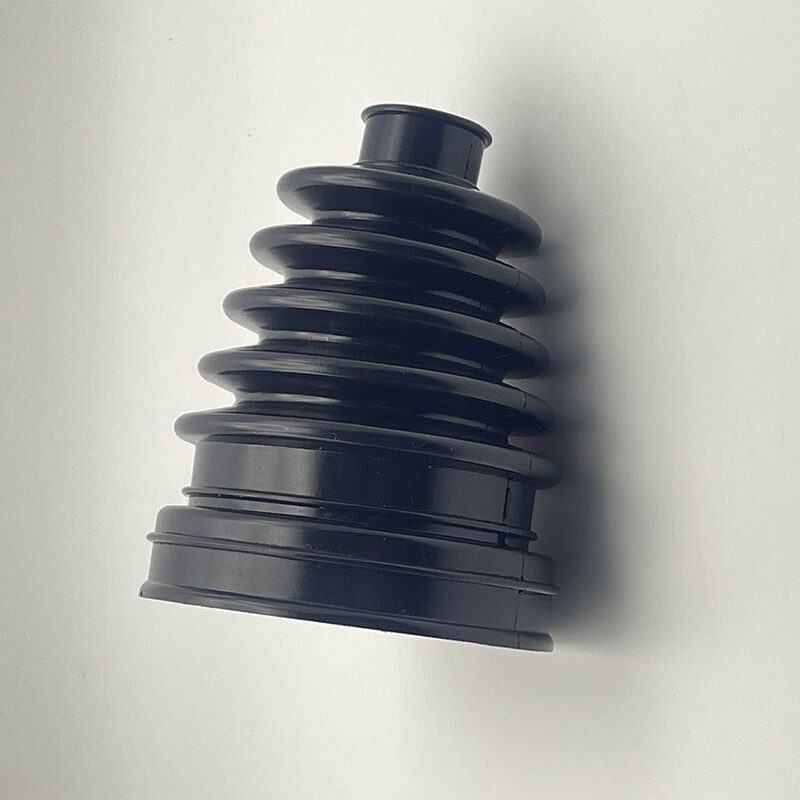
CV Joint Boot: High-Quality Rubber Protective Components for Automotive Drivetrain Systems
Overview
In the global automotive manufacturing and aftermarket supply chain, the CV joint boot is a core protective component for vehicle drivetrain systems, also known as the constant velocity joint protective sleeve or CV boot. As a precision-molded rubber part engineered for professional automotive applications, our CV joint boots are designed to deliver reliable protection, flexible movement compensation and long service life for CV joints— the key transmission components that connect the drive shaft and wheels, enabling smooth power transmission during steering and suspension articulation. Manufactured to meet international automotive standards and the precise fit requirements of various vehicle makes and models, our products are suitable for passenger cars, light commercial vehicles, SUVs, off-road vehicles and heavy-duty trucks, serving both OEM assembly lines and high-end aftermarket replacement markets with consistent quality and perfect compatibility.
Unlike ordinary low-grade CV joint boots on the market, our products are developed based on in-depth research of automotive drivetrain working characteristics and actual driving environment demands. We adhere to strict production and quality control standards, ensuring that every detail of design, material selection and molding process meets the operational requirements of CV joint systems. We recognize that the failure of a CV joint boot will directly lead to the loss of lubricating grease in the CV joint and the intrusion of external contaminants, which in turn causes abnormal wear, noise and even sudden failure of the CV joint, affecting vehicle driving safety and increasing maintenance costs. Therefore, all our CV joint boots undergo rigorous performance testing and quality inspection before leaving the factory, becoming the preferred choice for automotive manufacturers, Tier 1 suppliers and aftermarket distributors pursuing high cost performance and reliable quality.
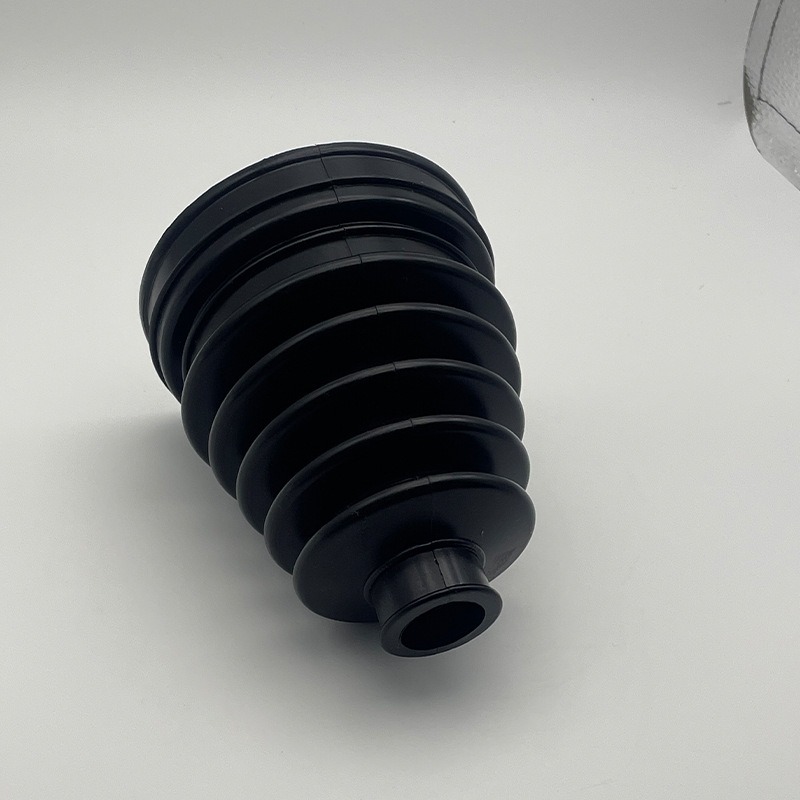
The CV joint boot undertakes two core functions in the vehicle drivetrain system: sealed protection and flexible movement adaptation. On the one hand, it forms a closed protective barrier for the precision CV joint internal structure, effectively isolating external contaminants such as road dust, sand, stone chips, moisture, road salt and mud, and preventing these substances from entering the joint and causing abrasive wear to the internal steel balls, raceways and cages. At the same time, it tightly seals the special high-performance lubricating grease inside the CV joint, ensuring long-term sufficient lubrication of the internal moving parts and avoiding dry friction caused by grease loss. On the other hand, the CV joint boot features a professional corrugated structural design, which can freely adapt to the large-angle axial, lateral and angular movements of the CV joint during vehicle steering, suspension up and down and driving, without restricting the normal operation of the joint, and at the same time absorbing the vibration generated by the drivetrain during operation, reducing noise transmission and improving vehicle driving comfort.
With the continuous upgrading of automotive drivetrain technologies, such as the popularization of front-wheel drive, four-wheel drive and electric vehicle drive systems, the performance requirements for CV joint boots are constantly improving. Our R&D team keeps pace with the development of the automotive industry, continuously optimizing product design and material formulations, developing specialized CV joint boots for high-performance vehicles, electric vehicles and off-road vehicles, to meet the unique working demands of different drivetrain systems such as high temperature resistance, high wear resistance and enhanced structural strength, ensuring that our products always maintain advanced performance and perfect adaptability in the rapidly evolving automotive market.
Material Selection
The performance and service life of CV joint boots depend on scientific and rigorous material selection, which is the cornerstone of our product design and manufacturing. We exclusively use high-grade synthetic elastomers, OEM-approved bonding agents and reinforced materials that meet international automotive material standards, and avoid low-grade natural rubber in all CV joint boot products— this is a standard practice in professional automotive rubber parts manufacturing, as natural rubber lacks the comprehensive performance required to withstand the harsh working environment of the vehicle undercarriage. Each elastomer material is carefully selected according to the actual application scenarios of the CV joint boot, including the vehicle’s use environment, drivetrain type, load level and movement range, to ensure that the product has optimal performance in terms of wear resistance, low temperature flexibility, aging resistance and oil resistance. The following is a detailed introduction to the main base materials of our CV joint boots and their core performance characteristics and application scope:
- EPDM (Ethylene Propylene Diene Monomer): As the mainstream material for ordinary passenger car CV joint boots, EPDM is the workhorse elastomer in our product line, with an operating temperature range of -40°C to +120°C. It has excellent ozone resistance, UV aging resistance and weather resistance, which can withstand the long-term outdoor exposure and temperature changes of the vehicle undercarriage. At the same time, it has good resistance to road salt, moisture and mild chemical corrosion, and maintains good flexibility even in low temperature environments, avoiding cracking caused by low temperature brittleness— a common failure of low-grade rubber boots in winter. EPDM CV joint boots have the advantages of light weight, low compression set and good bonding performance with metal clamps, and are suitable for the front and rear CV joints of most mainstream front-wheel drive and rear-wheel drive passenger cars, with high cost performance and stable performance, meeting the daily driving needs of most vehicle owners.
- TPR/TPE (Thermoplastic Rubber/Elastomer): A modified thermoplastic elastomer material for customized CV joint boot products, with an operating temperature range of -30°C to +110°C. TPR/TPE combines the flexibility of rubber and the processability of plastics, with the advantages of light weight, good low temperature flexibility and easy molding of complex structures. It has good abrasion resistance and weather resistance, and is suitable for the customized development of CV joint boots for new energy vehicles and special vehicle models, meeting the lightweight and modular design requirements of modern automotive drivetrains, and can be perfectly matched with the special drive shaft structures of electric vehicles.
Characteristics
Our CV joint boots are engineered and manufactured to meet the strict performance requirements of automotive drivetrain systems, with all performance indicators validated through rigorous laboratory testing and actual vehicle road tests. The core performance characteristics that define the high quality of our products are as follows:
- Superior Sealing Performance: Precision-molded according to the precise dimensions of CV joints and drive shafts, the product has a perfect fit with the matching components. The smooth inner wall and tight end connection structure ensure that the internal lubricating grease is not easy to leak, and the external contaminants are effectively isolated. Even under the condition of long-term vehicle vibration and joint movement, the sealing performance remains stable, fundamentally avoiding the failure of CV joints caused by poor sealing.
- Excellent Movement Adaptability: The scientific corrugated structural design— including the number of corrugations, corrugation height and wall thickness distribution— is optimized according to the movement range of different CV joints. The product can freely adapt to the angular movement (0-90°) and axial stretching/compression of the CV joint during vehicle steering and suspension movement, without cracking, tearing or permanent deformation, and the flex fatigue life reaches more than 10 million cycles, meeting the long-term use requirements of the vehicle.
- Wide Temperature Adaptability: The elastomer material is formulated with special additives, making the CV joint boot able to maintain good flexibility and structural strength in a wide temperature range from -40°C to +150°C. It will not become brittle and crack in the extremely cold environment of high latitude areas, nor will it soften and deform in the high temperature environment of the engine compartment and undercarriage caused by long-term driving, ensuring stable performance in all climate zones.
- Strong Abrasion and Impact Resistance: The outer surface of the product has high hardness and good wear resistance, which can effectively resist the abrasion of road sand, stone chips and mud during vehicle driving; the optimized material formula and structural design improve the impact resistance of the product, and it is not easy to be punctured or torn by hard objects such as stone chips, adapting to complex road driving conditions.
- Outstanding Aging and Corrosion Resistance: Resistant to ozone aging, UV aging and heat aging, the product will not crack, harden or fade after long-term outdoor exposure; it has good resistance to road salt, acid rain, detergent and other chemical corrosion, and can maintain stable performance in the harsh corrosive environment of the vehicle undercarriage, with a service life matching the vehicle’s normal maintenance cycle.
- Good Oil and Grease Compatibility: The product material has excellent compatibility with various automotive CV joint special lubricating greases, without chemical reaction, swelling, softening or hardening caused by contact with lubricating grease, ensuring that the lubricating grease maintains its original performance, and the material itself does not degrade due to grease immersion.
- Reliable Bonding and Clamping Performance: The end of the boot is specially treated to ensure good bonding performance with the metal clamp. After crimping, the clamp has a stable clamping force, which can resist the long-term vibration of the vehicle and the pulling force of the joint movement, effectively preventing the boot from falling off and ensuring the long-term stability of the whole protective system.
4. Application Scope
Our CV joint boots have a full range of product specifications and models, covering almost all mainstream vehicle makes and models in the global market, and can be flexibly applied to various vehicle drivetrain systems, with customized development capabilities for special vehicle models. The main application scope is as follows:
- Passenger Car Drivetrains: The main application scenario of our products, including front-wheel drive, rear-wheel drive and four-wheel drive passenger cars of various brands and levels. We provide inner and outer CV joint boots for drive shafts, matching the different CV joint structures (ball cage type, cross shaft type) of mainstream passenger cars, realizing perfect fit and reliable protection.
- Light Commercial Vehicles (LCVs) and Vans: Developed medium-duty CV joint boots with enhanced abrasion resistance and mechanical strength, adapting to the high load, frequent start-stop and complex road driving characteristics of light commercial vehicles, suitable for various delivery vans, light trucks and micro-vans.
- SUVs and Off-Road Vehicles: Specialized CV joint boots with thickened wall thickness, reinforced structure and high wear resistance, designed for the off-road driving characteristics of SUVs and off-road vehicles such as large suspension travel, large joint movement angle and harsh road conditions, able to withstand the impact of gravel, stone chips and complex terrain, providing more durable protection for off-road vehicle drivetrains.
- Heavy-Duty Trucks and Commercial Vehicles: Heavy-duty CV joint boots with polyester fiber reinforcement layers, aiming at the high load and high torque characteristics of heavy-duty truck drivetrains, with high tensile strength, tear resistance and dimensional stability, suitable for various heavy-duty trucks, tractors and large commercial vehicles.
- New Energy Electric Vehicles (EVs/HEVs/PHEVs): Customized lightweight CV joint boots developed for the drivetrain characteristics of new energy vehicles, adopting TPR/TPE or modified EPDM materials, matching the compact drive shaft and CV joint structure of electric vehicles, meeting the lightweight and low-noise design requirements of new energy vehicles, and having good compatibility with the special lubricating systems of electric vehicle drivetrains.
- Special Purpose Vehicles: We can provide customized CV joint boot development and production services for special purpose vehicles such as racing cars, fire trucks, ambulances and agricultural vehicles, according to their unique drivetrain design and working environment requirements, to meet the personalized performance needs of special vehicles.
Quality Assurance
We adhere to the professional manufacturing concept of automotive rubber parts, and adopt advanced production equipment and strict quality control system to ensure the consistent quality of every CV joint boot product. Our production facilities comply with international automotive industry quality management standards, and the whole production process from raw material incoming inspection to finished product delivery is under strict control, to ensure that the products meet the high requirements of OEM and aftermarket markets.
In terms of manufacturing process, we adopt precision injection molding and compression molding technologies for different product specifications and materials, with full automatic production lines to realize continuous feeding, molding, demolding and trimming, which not only improves production efficiency, but also ensures the dimensional accuracy and structural consistency of products. The mold design is based on the 3D scanning data of the original vehicle CV joint and drive shaft, with high machining precision, ensuring that the molded product has a perfect fit with the matching components. The vulcanization process is precisely controlled according to the material characteristics, with accurate control of vulcanization temperature, time and pressure, to ensure that the elastomer material reaches the optimal cross-linking degree, and the product has stable physical and chemical properties.
Our quality assurance system runs through the entire product life cycle:
- Raw Material Incoming Inspection: All elastomer raw materials, reinforcement materials, bonding agents and metal clamps must pass strict incoming inspection, including material composition, physical properties, chemical resistance and other indicators, and only qualified materials can be put into production, eliminating quality risks from the source.
- In-Process Quality Control: In the production process, multiple quality inspection points are set up to conduct real-time detection of product dimensional accuracy, wall thickness uniformity, corrugation structure and appearance quality, and unqualified semi-finished products are removed in time to ensure that the products entering the next process meet the standards.
- Finished Product Performance Testing: All finished products undergo batch sampling testing, including sealing performance test, flex fatigue test, high and low temperature resistance test, abrasion resistance test and aging resistance test, and only the products that pass all tests can be put into storage. For OEM customized products, 100% appearance and dimensional inspection is carried out to ensure perfect matching with the assembly line.
- Actual Vehicle Validation: Before mass production, all new developed CV joint boot products must undergo actual vehicle road tests of more than 100,000 kilometers, simulating different road conditions and driving environments, to verify the actual use performance and reliability of the products, and optimize the product design according to the test results.
- Full Traceability Management: Establish a complete product traceability system, record the production batch, raw material batch, production equipment, inspection results and other information of each product, and realize the full traceability of product quality, which can quickly locate and solve problems in case of quality complaints.
We are committed to continuous improvement of product quality and manufacturing process, investing in advanced R&D equipment and testing instruments, and establishing a professional R&D team composed of rubber material engineers and automotive structural engineers. We keep close communication and cooperation with automotive manufacturers and distributors, listen to market feedback, and continuously optimize product design and material formulation, to provide the global automotive market with higher quality, more reliable and more compatible CV joint boot products, and create greater value for customers and vehicle owners.