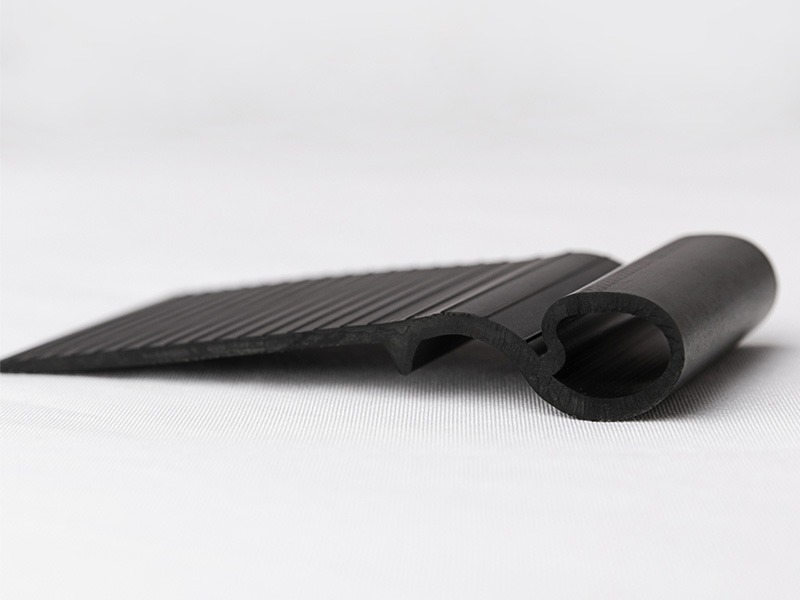
General purpose rubber seals are foundational, low-profile industrial components that block the ingress of weather, dirt, pests, moisture, and noise across dozens of end-use markets. As global industrial supply chains continue to mature, sourcing these high-volume, mission-critical parts from China has evolved from a cost-cutting tactic to a strategic operational choice that balances performance consistency, broad material customisation, and world-class production capacity.
This guide is developed with reference to industry benchmarks from global sealing solution leaders, breaking down every core dimension of sourcing general purpose rubber seals from China. It highlights the unique advantages of EPDM — the most widely used material for general purpose seals — covers its full application scope, outlines supplier evaluation frameworks, quality control workflows, and actionable steps to build a resilient, high-performing seal supply base that aligns with international industrial standards.
What Defines High-Quality General Purpose Rubber Seals
General purpose rubber seals are engineered to deliver reliable, long-lasting sealing performance across common non-extreme operating conditions, without unnecessary premium pricing for over-specified specialty materials. The best-in-class products follow the design logic: they are manufactured from carefully compounded rubber and plastic materials to enhance fit and function for diverse demanding applications, while prioritising ease of installation and long-term stability.
Unlike custom high-performance specialty seals built for extreme aerospace or chemical processing environments, general purpose seals are designed to strike a balanced sweet spot between affordability, broad application compatibility, and sufficient durability to withstand years of routine outdoor and indoor use. Their core design goals are simple but non-negotiable: keep out unwanted external elements, maintain their shape and elasticity across temperature fluctuations, and avoid cracking, shifting, or shattering even after decades of regular service.
Core EPDM Material Advantages for General Purpose Rubber Seals
EPDM (Ethylene Propylene Diene Monomer) is the undisputed leading material choice for modern general purpose rubber seals, and Chinese manufacturers have mastered the formulation and production of high-performance EPDM compounds to international standards.
Exceptional Weather and Temperature Resilience
EPDM’s unique molecular structure delivers unmatched tolerance to extreme temperature shifts, remaining soft and flexible even in frigid sub-zero conditions, while resisting brittleness or melting in sustained high-heat environments. This property directly eliminates one of the most common failure modes for low-quality general purpose seals: cracking and permanent deformation after exposure to seasonal temperature swings.
Outstanding Ozone and UV Aging Performance
Without vulnerable double bonds on its main polymer chain, EPDM general purpose seals are almost immune to ozone degradation and UV radiation damage from long-term outdoor exposure. Unlike seals made from cheaper generic rubber that turn brittle and crack in 1–2 years of open-air use, well-formulated EPDM seals can maintain full sealing performance for 10 to 15 years in unsheltered outdoor locations.
Low Compression Set for Sustained Sealing
EPDM delivers excellent long-term elastic recovery even after being continuously compressed in a narrow installation gap. Its industry-leading low compression set value ensures general purpose seals will not permanently deform or flatten over time, maintaining consistent tight sealing pressure between two mating surfaces for their entire service life.
Broad Compatibility With Harsh Common Elements
High-quality EPDM general purpose seals resist water, steam, dilute acids, alkaline solutions, and most common polar industrial chemicals. They do not swell, soften, or lose sealing performance when exposed to rainwater, cleaning detergents, or everyday atmospheric pollutants, outlasting seals made from natural rubber or cheaper generic elastomers in 90% of common application scenarios.
Formulation Flexibility for Balanced Performance
Chinese EPDM compound engineers can tune EPDM formulations precisely to deliver targeted performance characteristics for specific general purpose use cases. For example, dense EPDM can be formulated for rigid structural sealing support, while astragal sponge EPDM can be adjusted for ultra-soft cushioning sealing that absorbs impact and vibration without damaging mating surfaces.
Full Application Scope of General Purpose EPDM Rubber Seals
Drawing on the industry standard application framework established by leading global seal manufacturers, general purpose EPDM rubber seals produced in China cover every major high-volume industrial and commercial market.
Construction and Building Envelope Sealing
This is the largest consumption segment for general purpose rubber seals. EPDM seals are widely deployed on garage overhead doors, metal entry doors, exterior windows, and curtain wall glazing systems. They form a complete continuous barrier to block rainwater, outdoor dust, drafts, and small pests from entering building interiors, directly reducing HVAC energy loss by 15–25% by eliminating air leakage through gaps.
Marina and Marine Infrastructure Applications
General purpose EPDM rubber seals are ideal for mooring snubbers, dock bumper cushioning layers, and small hatch cover seals on light watercraft. Their exceptional resistance to salt spray, constant moisture, and long-term outdoor coastal exposure ensures they do not degrade rapidly in harsh marine environments, even with no special routine maintenance.
Industrial Dock Bumper Systems
Chinese suppliers produce a full range of EPDM sealing and cushioning components for single cushion dock bumpers, horizontal dock bumpers, and double cushion dock bumpers. These seals absorb the repeated high impact force from reversing trucks at loading docks, protecting both the dock structure and vehicle bodies from damage, while retaining their shock-absorbing performance for years of heavy daily use.
HVAC System Sealing Solutions
General purpose EPDM seals are standard components for residential and commercial HVAC units, central air conditioning cabinet doors, and air duct connection joints. Their excellent thermal insulation properties prevent conditioned air leakage, improving overall HVAC system energy efficiency, while their moisture resistance prevents mould growth and corrosion at sealed connection points.
Threshold and Floor Gap Seals
Dense EPDM general purpose seals are also used as garage door threshold seals and expansion joint filler strips for concrete garage floors. They seal the narrow gap between the bottom edge of the overhead garage door and the concrete floor, preventing rainwater, melting snow, leaves, and small pests from entering the garage interior even in heavy storm conditions.
China’s Core Competitive Advantages in General Purpose Rubber Seal Manufacturing
Chinese general purpose rubber seal producers have built an unrivalled industrial ecosystem over 30 years of development, creating tangible benefits for global buyers that no other manufacturing region can match.
Full Local EPDM Raw Material Self-Sufficiency
China is home to multiple world-scale EPDM synthetic polymer production facilities, delivering high-quality base EPDM material that fully meets international ASTM performance standards at 30–40% lower cost than imported EPDM used by Western seal manufacturers. This local supply chain eliminates cross-border material tariffs and long lead times, creating a stable, low-cost foundation for seal production.
Decades of OEM Experience With Global Industry Leaders
Many top Chinese general purpose seal factories have 20+ years of OEM production experience supplying global brands. Their engineering teams are fully familiar with global industry seal standards, precise profile dimensional tolerance requirements, and the strict performance benchmarks demanded by North American and European industrial buyers.
Diversified Product Line Coverage
Leading Chinese suppliers offer a complete portfolio of general purpose seal product types aligned with global market needs. These include StanStrip style dense EPDM solid rubber seals, Unicell grade premium astragal sponge rubber seals, and heavy-duty EPDM garage door threshold seals, all of which can be produced to match existing global standard part specifications exactly.
Massive Scalable Production Capacity
The aggregated annual general purpose rubber seal output of China’s core seal manufacturing clusters exceeds 2 billion linear metres. Individual large-scale factories can deliver 5 million+ metres of EPDM seals per month, with the ability to scale up production volume rapidly to meet unexpected spikes in global customer order demand, without extending delivery timelines or sacrificing quality consistency.
Mature Value-Added Processing Capabilities
Chinese seal manufacturers offer a full range of downstream processing services at very low incremental cost, including cutting seals to standard lengths such as 8 feet, punching pre-drilled mounting holes, applying heavy-duty pressure-sensitive adhesive backing, and packaging products to exact customer retail or industrial packing requirements.
Steps to Select a Qualified Chinese General Purpose Rubber Seal Supplier
Verify Specialised EPDM Seal Production Experience
Prioritise suppliers that focus 70%+ of their production capacity on general purpose EPDM rubber seals, rather than generalist factories that produce a wide range of unrelated plastic and metal parts. Request reference project proof of their past cooperation with global construction, automotive, or industrial seal clients, to confirm they have delivered products matching your application standards.
Validate Relevant Industry Certifications
Check that the supplier holds ISO 9001 quality management system certification, and that their EPDM compound formulations meet ASTM D2000 international rubber performance standards. For public construction projects, confirm they can provide valid fire resistance test reports that meet local building code requirements for sealing components.
Audit In-House Laboratory Testing Capabilities
A qualified supplier must have a fully equipped in-house test lab, with equipment to measure Shore A hardness, tensile strength, elongation, compression set, ozone aging performance, and low-temperature flexibility for every batch of EPDM compound. Avoid suppliers that outsource all material testing to third parties, as this will create quality consistency risks across large order volumes.
Request Validation Samples Matching Global Standard Parts
Before placing any bulk order, order pre-production samples that replicate existing industry standard seal specifications. Test the samples for dimensional accuracy, flexibility, and surface finish, to confirm they match the product performance level you require.
Quality Control Workflow for General Purpose Rubber Seal Sourcing
Formalise Full Written Technical Specifications
Document every critical performance requirement clearly in your purchase order, including exact profile dimensions, EPDM material hardness, minimum ozone resistance hours, maximum allowed compression set value, colour tolerance, and surface finish requirements. Attach 2D dimensioned drawings to eliminate all room for ambiguous interpretation by the factory’s production team.
Conduct Pre-Production Compound Verification
Before the supplier starts full mass production, require them to submit a material test report for the exact EPDM compound batch prepared for your order. Confirm that all performance indicators meet your technical specification, to avoid the supplier using low-filler, recycled rubber blends that reduce product service life.
Implement In-Line Dimensional Monitoring
Ask the factory’s quality team to perform periodic dimensional checks every 2 hours during the extrusion production run, to ensure all cross-section dimensions remain within your required tolerances. This prevents dimensional drift caused by extrusion speed or temperature fluctuations, which would make the seal fail to fit your installation gap correctly.
Complete Final Pre-Shipment Full Inspection
Before the cargo leaves the Chinese factory, conduct a full random inspection of the finished seals. Verify that the total quantity matches your order, that there are no surface defects such as bubbles, tears, or uneven curing, and that the packaging is robust enough to avoid deformation during long international ocean transport.
Pricing, MOQ and Lead Time Best Practices
Calculate Full Total Cost of Ownership
The unit price of the general purpose seal is only one part of your total sourcing cost. When comparing supplier quotations, confirm that all costs including custom mould fees, domestic freight to the port, export documentation, and standard neutral packaging are clearly listed. Avoid unreasonably low quotations that use low-grade recycled EPDM to cut initial production costs, which will lead to premature seal failure and massive long-term after-sales losses.
Leverage Flexible MOQ Policies
Most leading Chinese general purpose seal suppliers offer flexible minimum order quantities starting from 500 metres for custom profiles, and zero MOQ for standard common seal shapes that they already produce and keep in stock. This allows small businesses and new projects to purchase stock seals for immediate shipment without tying up excessive working capital in large inventory.
Plan Reasonable Production and Delivery Timelines
For standard off-the-shelf general purpose seals, Chinese suppliers can arrange shipment within 3–7 days of order confirmation. For new custom seal projects, custom extrusion die fabrication takes 5–10 days, followed by 15–25 days of bulk mass production. Add 25–35 days of sea freight transit time to North America or Europe when arranging your overall supply chain schedule.
Logistics and After-Sales Collaboration Guidelines
Use Deformation-Resistant Packaging
General purpose EPDM rubber seals are prone to permanent indentation if over-stacked under heavy pressure during shipping. Work with your supplier to use rigid corrugated cardboard boxes of appropriate dimensions, with enough internal support to ensure the seals are not squeezed or bent out of shape during long transit.
Prepare Complete Customs Clearance Documentation
Confirm your Chinese supplier provides a full set of accurate documentation including commercial invoice, detailed packing list, bill of lading, and EPDM material performance test reports. Correctly classify the general purpose rubber seals under the appropriate HS code to avoid unexpected customs clearance delays or extra import duty charges.
Build Long-Term Stable Partnership
Once you identify a qualified, reliable supplier, establish a long-term cooperative relationship instead of switching suppliers frequently to chase minor price discounts. This will qualify you for priority production scheduling, stable locked-in pricing, and dedicated technical support for new product design optimisation, creating far greater long-term value for your business.
Conclusion
Sourcing high-quality general purpose EPDM rubber seals from China, aligned with global leading industry standards, is a proven, highly rewarding strategic choice for global industrial buyers.
China’s mature EPDM material ecosystem, decades of OEM sealing experience, massive scalable production capacity, and cost structure advantages combine to deliver general purpose rubber seals that are quick and easy to install, stay soft in extreme temperatures, resist weather, dirt and pest ingress, and will not crack, move or shatter after years of service. By following the structured supplier selection, quality control, and collaboration best practices outlined in this guide, global procurement teams can build a resilient, cost-effective seal supply base that supports their product performance and profitability goals for years to come.