by admin admin No Comments

Automotive Rubber Seals: How the Right Weatherstripping Protects Vehicle Comfort

Automotive rubber seals are small components with an important job. Installed around doors, windows, hoods, trunks, and other openings, they help close gaps between moving parts and vehicle body structures. A properly selected seal can help limit water, dust, wind, and outside noise from entering the cabin or protected compartments. It also contributes to the fit, finish, and everyday usability of a vehicle.

For automakers, replacement-parts suppliers, distributors, and repair professionals, choosing the right automotive weatherstripping involves more than finding a rubber profile that looks similar to the original. The seal must match the application, fit the mounting area, compress correctly, and work with the surrounding components. Material, profile geometry, dimensions, installation method, and operating conditions all matter.

Hebei Shida Seal Group manufactures rubber sealing products for automotive applications, including weatherstrips, door seals, window channels, edge-protection profiles, and other technical rubber components. Understanding how these products function can help buyers identify the right type of seal for an OEM program or replacement application.

What Are Automotive Rubber Seals?

Automotive rubber seals are flexible components designed to form a barrier between two surfaces or around an opening. They may be installed on a vehicle body, door, window frame, hood, trunk, or other structure. When adjoining parts come together, the seal compresses or makes contact with a mating surface to help close the gap.

There is no single profile for every vehicle sealing requirement. Some applications use a hollow or sponge-rubber section that compresses when a door shuts. Others use a solid-rubber profile, a channel that guides moving glass, or an edge-protection trim that covers a sharp or exposed panel edge. The correct design depends on where the part is installed and what it needs to do.

Common automotive sealing products include:

  • Door weatherstrips and primary door seals
  • Hood and trunk seals
  • Window channels and glass run channels
  • Windshield and glass moldings
  • Edge-protection profiles
  • Sponge-rubber sealing profiles
  • Custom extruded and molded rubber components

These parts may look simple, but each serves a specific purpose. A door seal, for example, must provide sealing contact while allowing the door to open and close repeatedly. A window channel must accommodate glass movement while helping guide and cushion the glass. An edge trim may protect a panel edge and provide a finished appearance.

How Weatherstripping Supports Vehicle Comfort

A vehicle’s interior is exposed to changing weather and road conditions. Rain, dust, wind, and airborne debris can reach gaps around doors and windows if those openings are not properly sealed. Weatherstripping helps reduce the pathways through which these elements may enter.

A continuous and well-fitted door seal can help reduce drafts around the cabin. It may also help limit wind noise, especially at highway speeds, by closing gaps around the door opening. The seal forms part of a larger vehicle system, so results depend on the design of the full assembly, the condition of adjacent parts, and proper installation.

Seals can also cushion contact between components. When a door closes, the rubber profile compresses between the door and body. This helps avoid direct contact between hard surfaces and can contribute to a more controlled closing feel. Over time, however, rubber can wear, deform, crack, or lose resilience. A damaged or poorly fitted seal may leave gaps, reduce sealing contact, or create unwanted noise.

Why EPDM Is Used for Automotive Sealing

EPDM rubber is widely used in vehicle sealing applications because it can be formulated for flexible profiles exposed to outdoor conditions. It is available in solid and sponge forms, with each type suited to different design requirements.

EPDM sponge rubber has a cellular structure that allows it to compress under pressure. This makes it useful where the seal needs to fill a gap or maintain contact despite variations in the space between two surfaces. Sponge profiles are often considered for door, hood, trunk, and other weather-sealing applications.

Solid EPDM rubber is denser and more resistant to deformation under certain design conditions. It can be used in profiles that need a firmer structure, edge coverage, or a defined contact surface. Some applications combine different rubber sections or materials to achieve a specific balance of flexibility, support, and surface function.

Material selection should be based on the part’s intended location and operating environment. Buyers should confirm the required compound, hardness, density, color, dimensional tolerances, and any customer-specific specifications with their supplier. Avoid selecting a material based only on the name “EPDM”; the details of the compound and profile design affect suitability.

Selecting a Seal Profile for the Application

The profile is the cross-sectional shape of the seal. It determines how the part attaches, where it makes contact, and how it responds when compressed. Two products made from similar rubber may perform very differently if their profiles are not designed for the same mounting area.

When evaluating an automotive rubber seal, consider:

  1. Installation location: Identify whether the seal belongs on a door, window, hood, trunk, glass opening, or panel edge.
  2. Mounting method: Determine whether the part is pushed onto a flange, inserted into a channel, bonded, clipped, or installed by another method.
  3. Contact surfaces: Check the shape and position of the surfaces the seal must meet.
  4. Compression space: Measure the available gap with the vehicle component open and closed, where applicable.
  5. Profile dimensions: Record the cross-section, length, corner shape, and any special end or joint requirements.
  6. Movement and wear: Consider whether the part is static or repeatedly flexed, compressed, or rubbed by a moving component.
  7. Vehicle fitment: Confirm the vehicle model, production application, and relevant part references before ordering.

Accurate drawings, samples, photographs, and measurements can help reduce errors during product selection. For custom applications, sharing the mounting-area dimensions and expected sealing function gives the manufacturer a clearer basis for reviewing the profile.

OEM and Aftermarket Requirements

OEM programs and aftermarket replacement applications share the need for correct fitment, but their purchasing and validation requirements may differ.

OEM buyers typically work from defined technical requirements, drawings, samples, and vehicle-program specifications. Their evaluation may include profile geometry, material properties, tolerances, production consistency, packaging, and other project-specific criteria. Early communication between the buyer and manufacturer can help clarify the required design and reduce avoidable changes later in development.

Aftermarket buyers often need to identify a replacement part that matches an existing vehicle application. Clear fitment information is essential. A replacement seal that is close in appearance but wrong in profile or dimensions may not attach correctly or provide suitable contact. Distributors can support accurate ordering by documenting vehicle compatibility, product measurements, and installation position.

For both markets, the best starting point is a defined application rather than a broad request for “rubber weatherstrip.” Specify what the seal needs to do, where it will be installed, how it will attach, and what surfaces it must meet.

Signs a Vehicle Seal May Need Replacement

A seal may need inspection or replacement if it shows visible cracking, tearing, flattening, separation, or loss of elasticity. Other possible signs include water entering near a door or window, increased drafts, rattling, or wind noise that was not previously present. These symptoms can also have other causes, so inspect the surrounding components and installation before deciding that the seal is responsible.

When replacing a seal, remove the old part carefully and clean the mounting area as appropriate for the vehicle. Compare the replacement profile with the original, and check that clips, channels, and contact surfaces are compatible. Follow the vehicle or part supplier’s installation instructions. If the work involves windshield glass or another safety-related assembly, consult a qualified automotive-glass professional.

Rubber Seals Across Vehicle Types

Automotive sealing requirements extend beyond passenger cars. Trucks, buses, off-road vehicles, recreational vehicles, and specialty vehicles all use seals around doors, windows, access panels, and compartments. Their working environments can vary considerably: a highway truck, for example, may face frequent vibration and long operating hours, while an off-road vehicle may encounter dust, mud, and uneven terrain.

The application should guide the product specification. A seal designed for one vehicle or location should not automatically be assumed suitable for another. Buyers should provide the intended vehicle type, installation position, and operating conditions when requesting a product recommendation or quote.

Working with a Rubber Seal Manufacturer

A productive supplier discussion begins with clear technical information. Where possible, provide a two-dimensional drawing or cross-section, required length, material preference, mounting details, annual or order quantity, and the intended vehicle application. If a sample is available, it can help communicate details that are difficult to capture in a written description.

Hebei Shida Seal Group produces automotive rubber profiles and sealing components, including EPDM-based products and application-specific profiles. For OEM and aftermarket projects, buyers can discuss the required product type, profile, and fitment details with the company to determine the appropriate next steps. Any performance claims, certifications, testing requirements, production capacity, and lead times should be confirmed for the specific project.

Find the Right Automotive Rubber Seal

Automotive rubber seals support weather protection, cabin comfort, component cushioning, and finished appearance. Their effectiveness depends on selecting a suitable material and profile, matching the vehicle application, and installing the part correctly. Whether sourcing door weatherstrips, window channels, hood seals, glass moldings, or edge-protection profiles, start with the application requirements and verify the critical dimensions before placing an order.

For OEM programs and aftermarket replacement supply, a well-defined specification helps connect the sealing requirement to the right product. Contact Hebei Shida Seal Group with your application details to discuss automotive rubber sealing profiles for your project.
by admin admin No Comments

Sealing Gaskets for HVAC Ventilation Systems from China

by admin admin No Comments

Best EPDM Rubber Extrusion Manufacturers for Durable Seals and Edges

When selecting EPDM rubber extrusions and seals, you want products that offer reliable weather resistance, flexible installation, and long-lasting performance. This guide reviews top EPDM-based options from leading manufacturers, highlighting key features, ideal applications, and practical considerations for buyers in the United States. Use the table below for a quick snapshot of five strong choices, then dive into detailed product sections to compare compatibility, installation methods, and service life.

Product Brand Typical Use Why It Stands Out
Trim-Lok Trim Seal EPDM Closed Cell TRIM-LOK Edge sealing, RV, automotive, decorative trim Flexible sponge bulb design with weather resistance
ESI D Shaped EPDM Foam Seal ESI Doors, windows, automotive gaps High fit for vertical gaps; robust 3M tape option
ESI Ribbed Rectangle EPDM Foam Seal ESI Door/windows, marine and automotive applications Adheres with 3M tape; wide gap coverage
Tintvent Ribbed Foam Rubber Seal with Tape Tintvent Boats, autos, RVs, garages Self-adhesive, multi-function sealing

Trim-Lok EPDM Trim Seal With Side Bulb

TRIM-LOK EPDM Trim Seal

Check Price on Amazon

The Trim-Lok Trim Seal EPDM Closed Cell Sponge Rubber is designed as a flexible PVC trim with a sponge rubber bulb. It provides a secure seal for diverse applications, including RV slide-out seals, boat hatches, automotive doors, and decorative trim. Its weather-resistant properties shield against heat, ozone, water absorption, sunlight aging, and low temperatures, extending service life in harsh environments. The 3/8 inch bulb diameter fits edges around 1/16 inch, and the length is available in a 25-foot roll for large or multiple installations. This product is particularly useful where a flexible, cushioned seal is desired to reduce vibration and noise while preventing water intrusion.

ESI D Shaped EPDM Foam Seal

ESI D Shaped EPDM Foam Seal

Check Price on Amazon

The ESI D Shaped EPDM Foam Rubber Seal features a .687 inch height and .875 inch width with a 25-foot length, paired with 3M 4011 acrylic foam tape. It fills height gaps from .375 inch to .550 inch, making it a versatile option for doors, windows, cars, trucks, RVs, and boats. Its US manufacture supports local supply chains, and its combination of EPDM material with adhesive tape provides straightforward installation, excellent resistance to water absorption, ozone, and sunlight aging, along with low-temperature performance. This makes it suitable for multi-application weatherproofing projects.

ESI Ribbed Rectangle EPDM Foam Seal

ESI Ribbed Rectangle EPDM Foam Seal

Check Price on Amazon

This ribbed rectangle EPDM foam seal measures .187 inch in height and .500 inch in width, offered in a 25-foot length with 3M 4011 acrylic foam tape. It fills gaps from .125 to .188 inch and is designed for door, window, and hatch sealing across cars, trucks, RVs, trailers, and boats. The product emphasizes a balance of compression resistance and ease of installation, thanks to the tape backing. It’s suitable for applications needing a compact, high-tidelity seal that reduces noise and moisture ingress, while maintaining flexibility in tight spaces.

Tintvent Ribbed Foam Rubber Seal With Tape

Tintvent Ribbed Foam Rubber Seal

Check Price on Amazon

The Tintvent ribbed foam rubber seal includes self-adhesive backing for quick installation along doors, windows, and vehicle hatches. It seals against wind, water, light, and sound to protect boats, autos, RVs, and garages. The tape-backed design is ready to apply after a simple cleaning step, with the adhesive described as long-lasting and reliable. The 26-foot length provides ample material for larger projects, and the foam EPDM composition offers good resistance to environmental stressors, making it a practical option for multi-use weather sealing in marine and automotive contexts.

Buying Guide: Key Considerations For Epdm Rubber Extrusions And Seals

EPDM rubber extrusions and seals vary by geometry, tape adhesion, and environmental tolerance. Buyers should evaluate the following considerations to choose the best option for their project.

  • Material composition and density: EPDM seals offer excellent weather resistance and ozone protection. Higher foam density can provide better sealing against air gaps but may be stiffer, influencing installation in curved or tight corners.
  • Profile and size: Bulb, D-shaped, and ribbed profiles serve different sealing gaps. Ensure the profile matches the target edge or joint dimensions for an effective seal without excessive compression.
  • Adhesive backing vs. mechanical fastening: Tape-backed seals (3M 4011, 9485EK) simplify installation but might require surface preparation for optimal adhesion. Consider surface type and climate when selecting adhesive-backed options.
  • Temperature and weather tolerance: Exposure to heat, cold, sunlight, and moisture affects long-term performance. For outdoor or automotive use, prioritize UV and ozone resistance and low-temperature flexibility.
  • Application suitability: Marine, automotive, and RV contexts have specific requirements for water sealing, noise attenuation, and vibration control. Check manufacturer recommended applications to ensure compatibility.
  • Installation effort and maintenance: Some products are designed for quick installs, while others require cutting and precise fitting. Also consider replacement intervals and ease of removal if the seal needs upgrading.
  • Made in USA or regional supply: Local manufacturing can influence lead times and availability, which matters for projects with tight schedules.

Comparisons

For projects prioritizing ease of installation and quick sealing, tape-backed EPDM options (such as those from ESI and Tintvent) provide straightforward methods. If you need a longer continuous seal for expansive roof or marine runs, thicker EPDM sheets like RubberGard roofing material offer robust waterproofing, though installation may be more involved and require specialized tools. For gap-filled doors and windows, D-shaped and ribbed profiles from multiple brands deliver versatile options that balance compression and resilience. Always verify compatibility with your substrate, the intended climate, and the required service life when selecting between profiles and backing materials.

Consider obtaining samples or testing cut-to-length pieces when possible. This helps confirm fit, adhesion, and seal integrity before committing to larger purchases. In residential or light commercial settings, a combination approach—using tape-backed seals for quick returns and thicker sheets for roofing or marine contexts—can maximize performance while controlling costs.

by admin admin No Comments

Setting Blocks | The importance of using setting blocks & correct placement

What is a setting block?

  • Blocks made of neoprene, EPDM, silicone, polypropylene or other elastomeric material, used to support the bottom edge of a pane of glass when glazing it into a frame.

Principle functions of settings blocks:

  • Provide a cushion to support a glass pane’s dead load
  • Provide the proper glass bite at the cill
  • Prevent glass edges from touching the frame thereby preventing damage to the glass
  • Prevent glass edges from being immersed in water and facilitate drainage and drying

Important notes when installing setting blocks:

  • Glass-to-metal contact must be avoided at all times by using setting and location blocks having a hardness of 50⁰ to 90⁰ shore A durometer.
  • Only use blocks made of neoprene, EPDM, silicone, polypropylene or other elastomeric material.
  • Setting blocks should have a minimum thickness of 3mm and be at least 27mm in length per square metre of
    glass area.
  • When glazing laminated glass and/or sealed insulated glass units, drainage should be provided to prevent the glass edge being submerged.
  • Two or more 7mm diameter holes or 5mm x 9mm slotted holes, or larger, should be equally spaced in the c i l l s e c tion of s a sh or fr ame to a l low for ventilation/drainage of the cill section.


by admin admin No Comments

SETTING BLOCKS

There are four principal functions of setting blocks which are essential to understand if their installation is to be successful:

  • Provide a cushion for the glass panel to sit on and support the panels dead load

  • Enable the proper glass bite at the cill.

  • Glass edges are prevented from touching the cill frame because the setting block ensures there is the correct glass-to-metal clearance

  • Where applicable setting blocks can be used to retain drainage/weep baffles

In terms of design requirements and with a recommended hardness of 85(+/- 5) Shore A, thermoplastic, silicone, EPDM or neoprene are all suitable, although only EPDM or dense silicone should be used in structural glazing systems. Chemical compatibility with the various sealants used in structural glazing systems is of paramount importance and the setting blocks must be submitted to the sealant manufacturer for compatibility testing (according to ASTM C-1087 or similar) prior to system installation.

Setting blocks should not interfere with the installation of glazing gaskets and should allow any water in the cill to flow past freely. When setting blocks exceeding 19 mm are specified, the glass supplier should approve sizing. It is essential that any setting block is so designed that there is no shifting outward and inward in the cill gutter, otherwise there will not be constant glass support. Removable blocks should be wider – 1.50 mm each side – than the glass unit. If the glass unit were to shift outward or inward in the cill gutter the block contacts the glazing leg or stop before the glass.

Dimensions are relatively simple to adhere to. A setting block should not be less than 100 mm long. When the glass is more than 3.7 sq m, the setting block length should be increased by 25 mm for every square metre of glass area.

When it comes to the preferred location of the setting blocks, there are a number of points to bear in mind. The normal preference is for the two setting blocks to be at the quarter points, but there can be exceptions to this. Most commonly, if it is felt that the quarter-point location will lead to excessive deflection of the horizontal cill, the setting blocks can be moved equally towards the glass panel corners. The one important qualification is that under no circumstances should the outer end of the setting block be closer than 150 mm to the corner of the glass.

Once installed, the full thickness of the IG (insulated glass) unit should be resting on the setting block when the exterior glazing medium is compressed. To ensure this, the block should be a minimum of 28 mm wide for a 25 mm unit. The setting block should also have a minimum 6 mm from the bottom of the glass edge to the metal cill.

In structural glazing applications where the glass-to-glass joint is to be sealed flush with a silicone sealant, the setting block can be set back from the outer glass edge slightly to allow weather seal sealant cover. The rule is that the setting block must extend to a minimum of 50 per cent of the thickness of the outer pane of glass to offer adequate dead load support.

Finally when it comes to installation, the top surface of the setting block should he on a level plane. This provides proper support to the glass. It may be necessary for the bottom of the block to be sloped, to accommodate the outward slope of the cill’s web and to enable correct drainage.

by admin admin No Comments

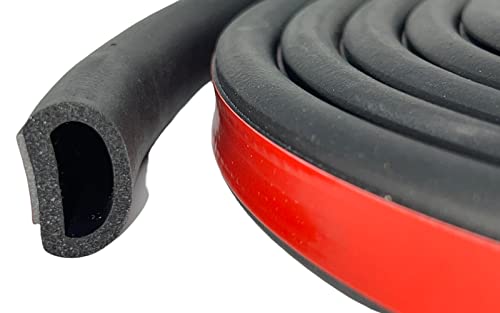
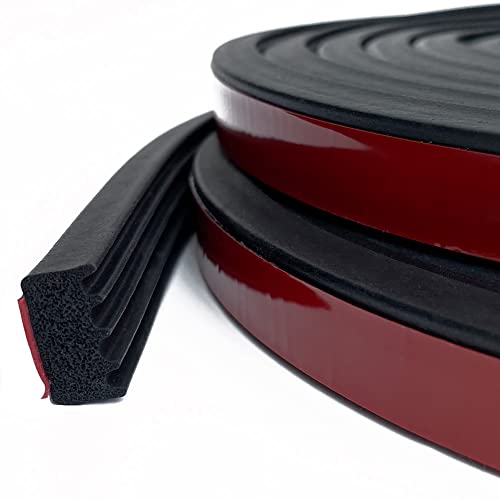
Hollow Rubber D Shape Extrusion EPDM Foam Sealing Strip for Car Door

Product Name
Automotive Door Seal Self Adhesive
Shape
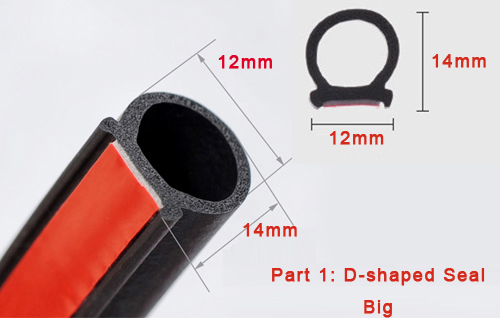
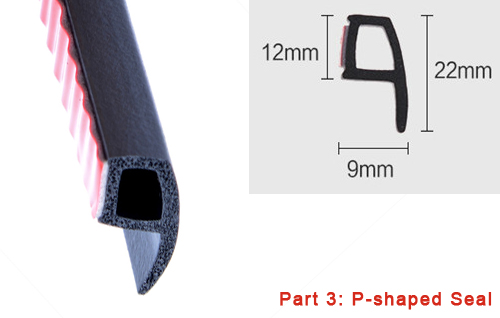
D Section (Big/Small), P Section, Z Section
Material
EPDM Rubber/Sponge Rubber
Brand
Shida
Used For
90% Cars

D-Shape Weather Stripping Rubber Seal

Universal Weatherstrip Car Door Rubber Seal Hollow Strips big d Universal Weatherstrip Car Door Rubber Seal Hollow Strips small d
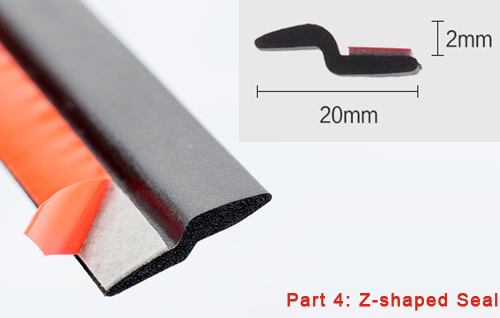
Universal Weatherstrip Car Door Rubber Seal Hollow Strips p-shaped seal Universal Weatherstrip Car Door Rubber Seal Hollow Strips z-shaped seal

Features:

Weather resist(sunlight,heat/freezing cold,ozone,UV)
Anti corrosion, hard wearing, noise control, durable
Anti impact/vibration/collision, aging resistance, flexible
Made by sponge foam EPDM rubber which makes its texture flexible,color black,durometer hardness 30 Shore A,the most popular type is foam hollow D shaped rubber seal strip with self adhesive backing.

Function:

  • Avoiding insects and noise
  • Prevent  the warm air or cold air enter into the indoor environment
  • Dustproof and windproof
  • Long-term anti-cold, hot, dry, wet ability

Packing:

  • Inner packing with plastic bags or paper box;
  • Outer packing with carton;
  • As per customer’s request 
by admin admin No Comments

5-151 Clip-on Sealing Profiles EPDM / Self-clamping gasketing / Gaskets, Edge protection profiles

5-151 Clip-on Sealing Profiles EPDM - 1 5-151 Clip-on Sealing Profiles EPDM - 2

Description

    • 5-151 Clip-on Sealing Profiles EPDM / Self-clamping gasketing / Gaskets, Edge protection profiles

Advantages

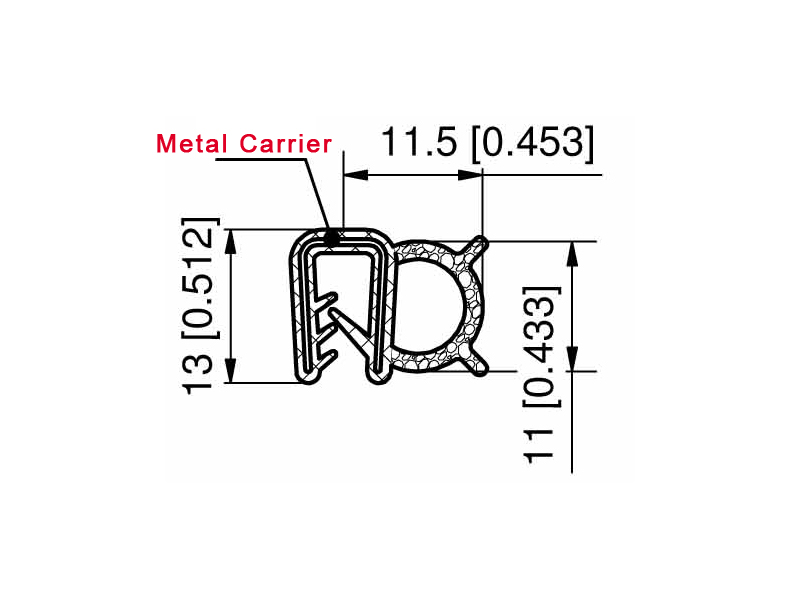
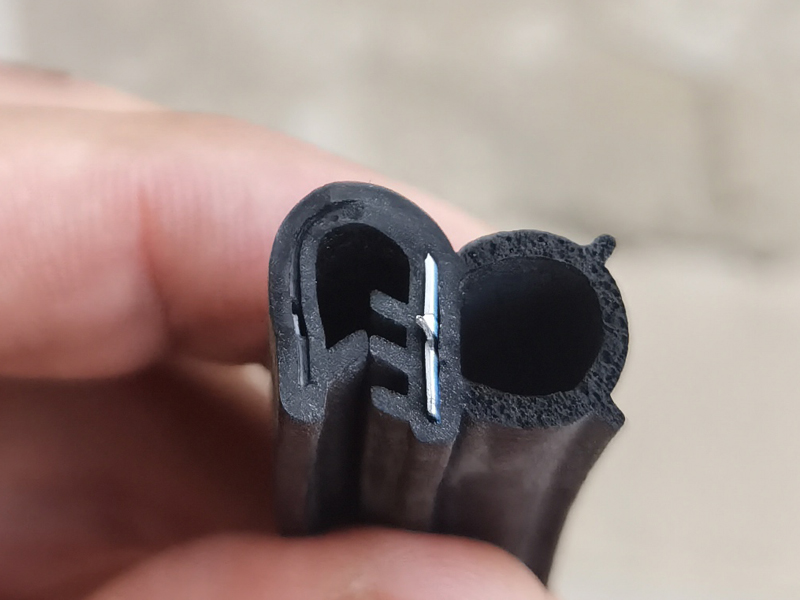
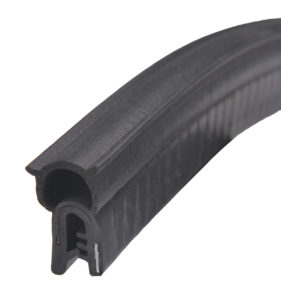
    • The sealing part of these profiles is made of EPDM sponge rubber and the clamp area consists of soft EPDM rubber with a steel / metal carrier.
    • In an extrusion process the two materials are bonded to each other through vulcanization.

Application

    • Ideal for enclosures and electrical cabinets, we developed a variety of gaskets

Materials

    • Clip-on profiles: EPDM, black
    • Carrier: steel / metal carrier
    • Sealing part: Sponge rubber

Packaging

    • 50 meters / 100 meters each roll
    • In cartons

Gasketings made by Hebei Shida Seal Group

    • We offer an extensive range of gaskets, including: along with customized gaskets based on a customer’s unique application request. Depending on a customer’s requirements, we provide gaskets made of PVC, EPDM, Neoprene, NBR, or a combination of foam rubber and PVC.
    • Four Lips Channel Sealing Profile EPDM
    • Self-Clamping Profiles EPDM
    • Conventional door profiles made of PVC
    • Channel Sealing Profiles PVC
    • Rectangular seals one side self-adhesive and non-stretching.
    • Rectangular Seals EPDM / CR
    • Round- and Castellated Profiles EPDM / CR
    • Filler for window seals
    • Window Seals EPDM / NBR
    • Clip-on Sealing Profiles EPDM / NBR
    • Clip-on Sealing Profiles PVC / EPDM
    • Profile for Double Doors EPDM
    • Edge Protections PVC
    • Edge Protections EPDM

by admin admin No Comments

Gaskets made of fire protection compound

Gaskets made of fire protection compoundGaskets made of fire protection compound fixed by securing in a U-section
  • Gasket made of fire protection compount sponge-rubber (EPDM) black (clamping profile EPDM 25 ° +/- 5 Shore A)
  • Gasket made of fire protection compount sponge-rubber (EPDM) black (clamping profile EPDM 60 ° +/- 5 Shore A)
  • Gasket made of fire protection compount sponge-rubber (EPDM) black
  • Clamping profile and window rubber profile

Gaskets made of fire protection compound self-clamping
  • Gasket made of fire protection compound sponge-rubber (EPDM) black (clamping profile sponge rubber EPDM) Steel spring core Bore holes approx. every 300 mm
  • Gasket made of fire protection compount sponge-rubber (EPDM) black (clamping profile EPDM 65 ° +/- 5 Shore A) Steel spring core Bore holes approx. every 300 mm

by admin admin No Comments

Automotive Rubber Hoses Meeting SAE Specifications

Automotive Rubber Hoses Meeting SAE Specifications

Automotive Rubber Hoses Meeting SAE Specifications

Coolant Hose

Specification

Reinforcement Material

Reinforcement Type

Heater/Air/Water Hose

SAE J20 R3

Polyester or Aramid

Knitted or braided

Radiator Hose

SAE J20 R4

SAE J20 R1

Polyester or Aramid

Knitted or braided or fabric

Fuel Hose

Specification

Reinforcement Material

Reinforcement Type

Fuel Injection Hose

SAE J30 R7

Polyester or Aramid

Knitted or braided or fabric

Petrol Hose

SAE J30 R6

Polyester or Aramid

Knitted or braided

Oil Hose

SAE J30 R6

Polyester or Aramid

Knitted or braided

NGV Hose

SAE J30 R7

Polyester or Aramid

Knitted or braided

Biodiesel Hose

SAE J30 R7

Polyester or Aramid

Knitted or braided

Transmission Oil Cooler Hose

SAE J30 R6

Polyester or Aramid

Knitted or braided

Gasohol Hose

SAE J30 R7

Polyester or Aramid

Knitted or braided

Silicone Hose

Specification

Reinforcement Material

Reinforcement Type

Silicone Heater Hose

SAE J20 R3

Polyester or Aramid

Knitted

Formed Silicone Hose

SAE J20 R1

Polyester or Aramid

Knitted