
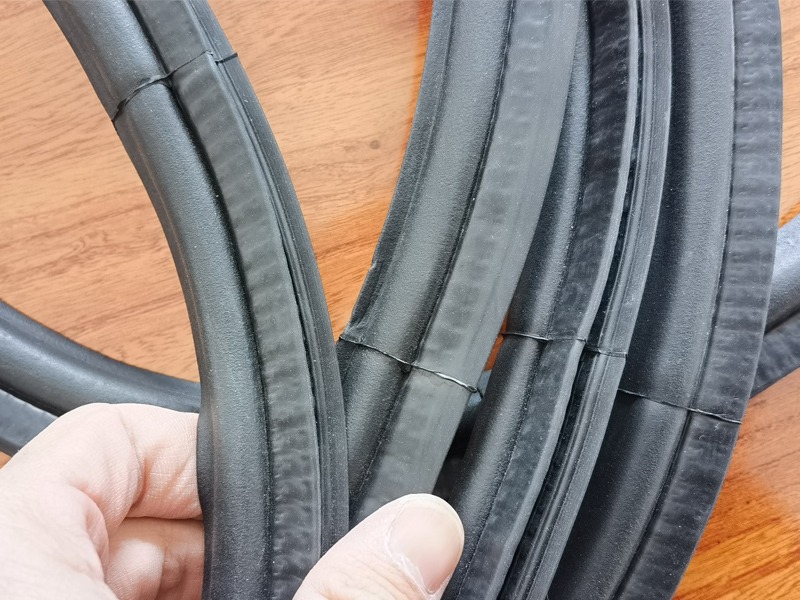
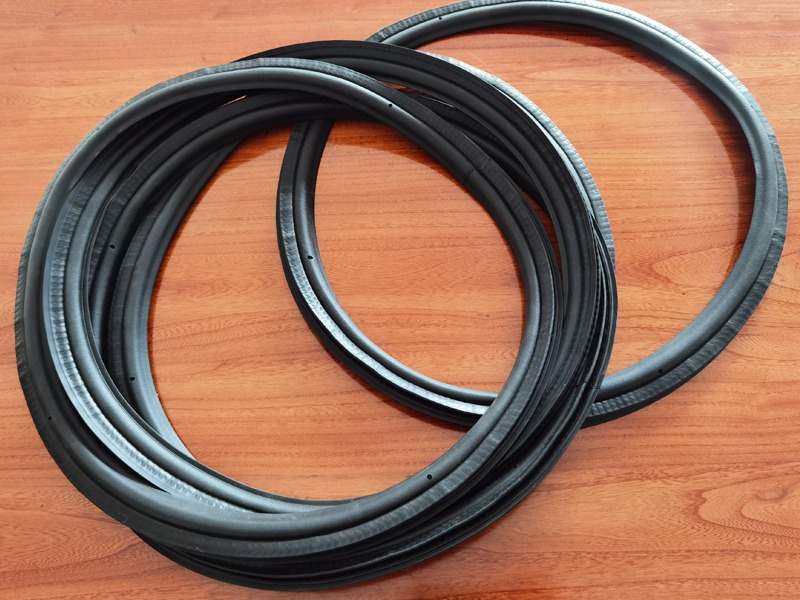
Film Vulcanising for Rubber Sealing Profiles
What Is Film Vulcanising
Film vulcanising is a permanent, material-fused joining process made exclusively for rubber sealing profiles. It creates a homogeneous splice rather than a superficial bonded seam, delivering far longer service life than cold adhesive joining methods.
Core Material Rule
Before curing, a thin uncured rubber foil — made from the exact same polymer compound, hardness and curing system as the two profile ends — is inserted between the cleanly cut, mated joint faces. No foreign adhesive layer is introduced at the connection.
Full Process Steps
- Cut profile ends to a flat, burr-free mating surface and wipe away all dust, release agent and surface residue
- Sandwich the matching rubber foil between the two prepared ends, then lock the assembly into a precision splicing fixture
- Apply uniform clamping pressure across the joint, then heat the fixture to the material-specific vulcanising temperature
- Hold for full dwell time, cool under pressure, then remove and trim minor flash to match the original profile dimensions
Cycle Time Difference
Film vulcanising has a longer total process time than glueing. The extended dwell is not redundant: it ensures heat penetrates the full joint interface, triggering complete cross-linking between the inserted foil and the parent rubber, rather than only surface-level adhesion.
Joint Performance
A finished film-vulcanised splice retains 85%+ of the base rubber profile’s original tensile strength, compression resistance and chemical compatibility. It will not delaminate, leak or fail at the seam even after years of repeated compression, temperature swings and fluid exposure.
Target Applications
This process is the standard for high-reliability sealing profiles including automotive door frame gaskets, industrial tank flanges, marine hatch seals and outdoor equipment weatherstripping, where joint failure is not acceptable.