
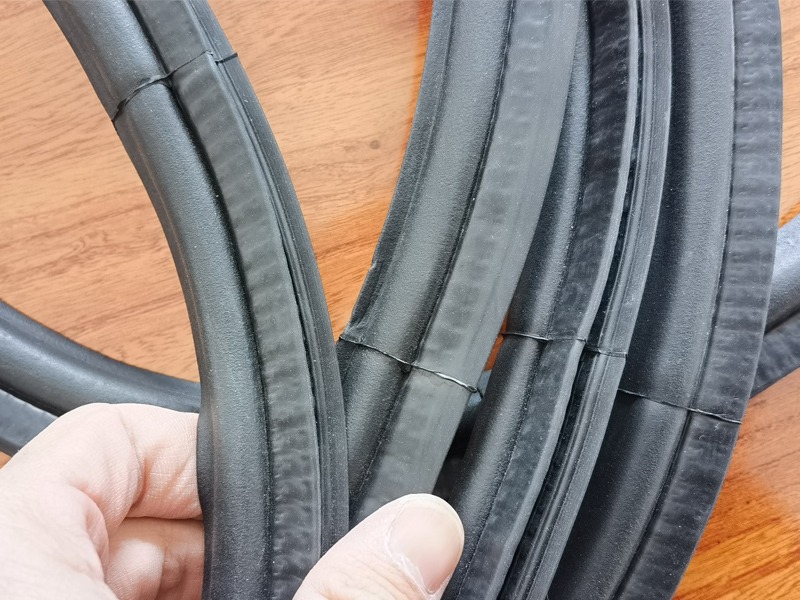
Rubber extrusions, profiles, and seals are essential components in countless industrial applications, providing critical barriers against leaks, dust, and environmental contaminants. While these components are often manufactured in long lengths, many installations require them to be formed into specific shapes, such as corners or continuous rings. To achieve this, the ends of the rubber profiles must be joined together through a process known as splicing. Depending on the required strength and durability of the final product, manufacturers choose between various methods, ranging from quick adhesive bonding to permanent chemical fusion.
The Process of Film Vulcanising
For applications where a failure in the joint is not an option, film vulcanising serves as the gold standard for creating a permanent and durable bond. Unlike simple glueing, which relies on surface adhesion, vulcanising creates a chemical cross-link between the polymer chains of the two joining ends. In this process, a thin foil made of the same material as the profile is inserted between the two ends. When heat and pressure are applied, this foil acts as a catalyst and bridging agent, fusing the separate pieces into a single, homogenous piece of rubber.
Hot-Splicing and the Hot Vulcanized Joint
The technique of hot-splicing extruded rubber products is specifically designed to ensure that the spliced area is as strong as the rest of the extrusion. By creating a hot vulcanized joint, the structural integrity of the seal is maintained even under extreme pressure or temperature fluctuations. This method eliminates the “weak point” typically found at the seam of a glued joint, ensuring that the ring or corner profile can withstand the same mechanical stresses as the original factory-extruded material.
Comparing Vulcanisation to Adhesive Glueing
When deciding between splicing methods, the primary trade-off is between speed and longevity. Glueing is a relatively fast process that is suitable for low-stress environments where a quick assembly is required. In contrast, film vulcanising requires a significantly longer processing time due to the necessity of controlled heating and curing cycles. However, this additional time investment results in a superior bond that is resistant to degradation, chemical exposure, and mechanical wear, making it the preferred choice for high-performance industrial seals.