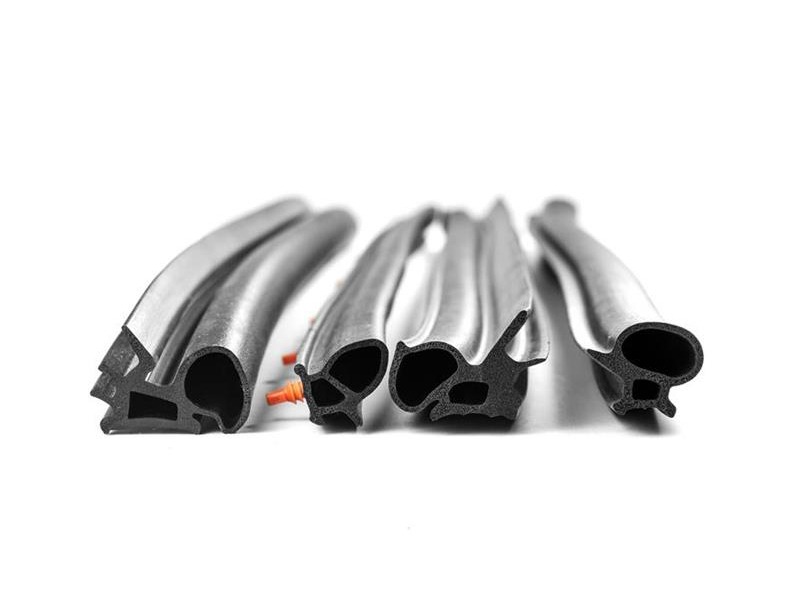
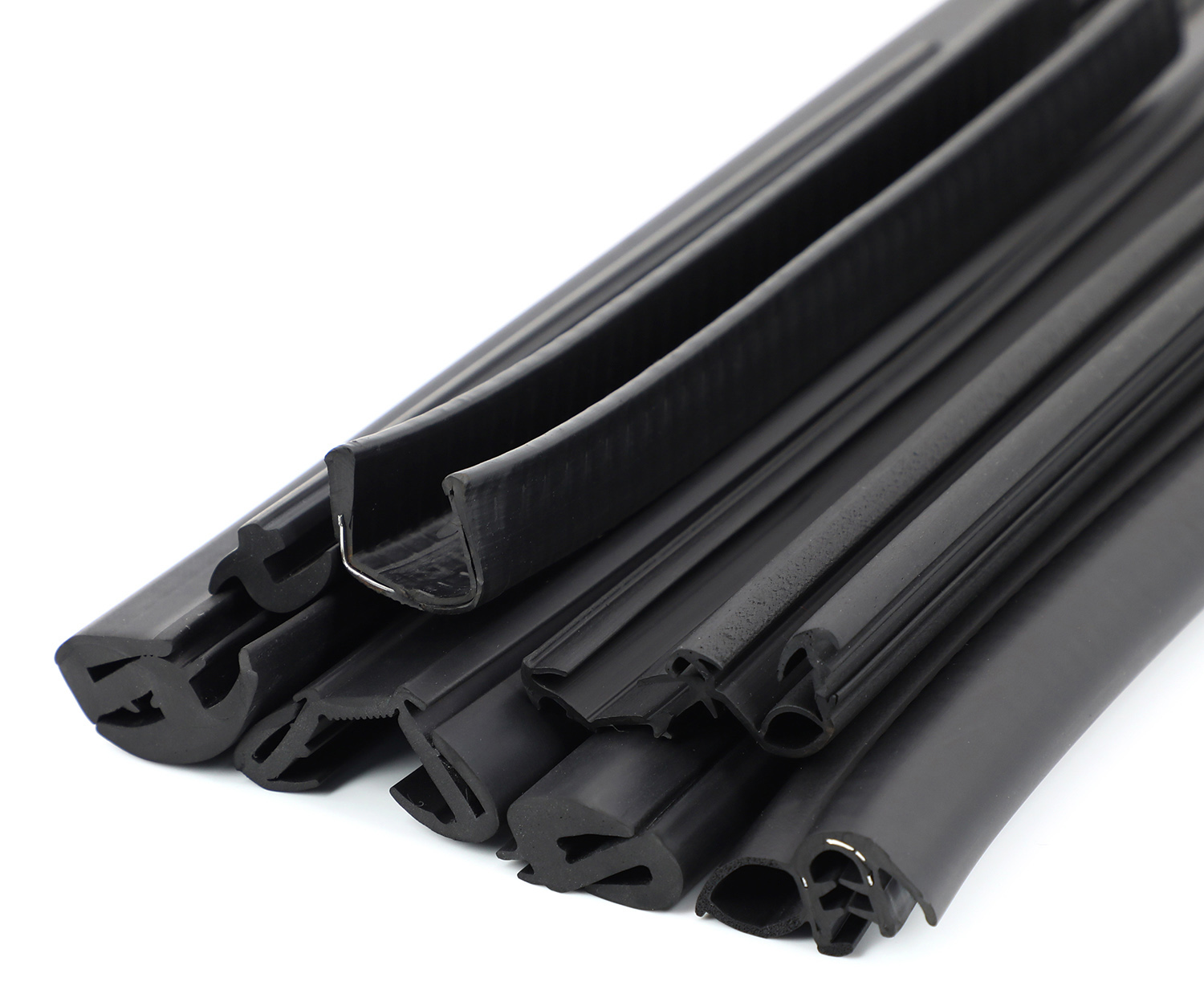
For global procurement teams and design engineers, sourcing rubber extrusions from China has evolved far beyond a basic cost-saving measure. Today, it is a strategic supply chain decision that combines mature manufacturing infrastructure, comprehensive material access, and flexible customisation capabilities. Rubber extrusions are critical components across automotive, construction, aerospace, electronics, and industrial sealing sectors, where consistent quality, precise dimensional control, and long-term durability directly impact end-product performance.
This guide breaks down every key aspect of sourcing rubber extrusions from China, from understanding the market’s core advantages to selecting qualified manufacturers, managing quality control, navigating logistics, and mitigating common sourcing risks. Whether you are placing your first small custom order or scaling up for mass production, this resource will help you build a reliable, cost-effective, and resilient supply base.
The Strategic Advantages of Chinese Rubber Extrusion Manufacturing
Unmatched Raw Material Supply Chain Integration
China is one of the world’s largest producers of synthetic rubber, covering all mainstream materials including EPDM, NBR, SBR, CR, silicone, HNBR, FKM (Viton), and special elastomers. Localised production of these raw materials eliminates the high import tariffs, long lead times, and supply volatility that many Western manufacturers face. This deep integration also allows factories to source custom compound formulations quickly, with many suppliers developing in-house rubber mixing systems to tailor hardness, temperature resistance, and chemical compatibility for specific project requirements.
Competitive Pricing Without Compromising Quality
Even after accounting for international shipping, customs duties, and third-party inspection costs, Chinese rubber extrusion suppliers typically deliver pricing 20–40% lower than equivalent production in North America or Western Europe. This price advantage does not come from cutting corners on quality; it stems from three core factors: lower skilled labour costs for extrusion operators and tooling engineers, large-scale production efficiency across thousands of moulds, and optimised continuous curing workflows that reduce material waste. Many leading factories have maintained 20+ years of OEM experience, refining their cost structure while meeting strict international standards.
Advanced Manufacturing and Technical Capabilities
The outdated stereotype of “low-quality Chinese production” no longer applies to the rubber extrusion sector. Top-tier Chinese manufacturers have heavily invested in modern continuous vulcanisation lines, including microwave hot air curing systems that deliver precise temperature control for consistent material properties across every metre of extruded profile. Many facilities operate 2,800+ square metre production spaces, host 3,000+ custom moulds, and employ dedicated R&D teams that support clients from initial concept design to final mass production. This level of infrastructure means factories can handle even highly complex, non-standard profiles that many Western suppliers refuse to quote for small to medium order volumes.
Broad Application Coverage and Customisation Flexibility
Chinese rubber extrusion suppliers serve an extremely wide range of global industries, building deep experience across automotive weatherstripping, architectural glazing seals, industrial door gaskets, food-grade silicone tubing, electronic conductive strips, and marine corrosion-resistant profiles. Unlike many regional manufacturers that only focus on a narrow product line, most leading Chinese suppliers offer full customisation support: they can produce solid rubber profiles, closed-cell sponge extrusions, rubber-metal bonded parts, fabric-reinforced hoses, and profiles with PSA adhesive backing or soft PVC co-extrusion. This flexibility makes it easy for buyers to consolidate multiple component orders with a single trusted supplier.
Rubber Extrusion Product Categories Available from Chinese Suppliers
Standard Solid Rubber Extrusions
This category covers the most widely used profiles, including rectangular strips, round cords, U-channels, D-seals, P-seals, and complex irregular shapes for sealing and cushioning applications. Chinese manufacturers produce these parts in materials ranging from general-purpose EPDM for outdoor weather sealing to oil-resistant NBR for automotive engine compartments. Most suppliers maintain large libraries of existing standard moulds, which can eliminate custom tooling fees for many common profile designs.
Sponge and Foam Rubber Extrusions
Closed-cell and open-cell sponge extrusions are one of China’s strongest product segments, with factories offering consistent density control, excellent compression set resistance, and uniform surface texture. These products are widely used for insulation, sound dampening, gap filling, and shock absorption in construction, HVAC, and transportation sectors. Common available materials include EPDM sponge, silicone foam, neoprene sponge, and low-density PU foam, all available in custom colours and pressure-sensitive adhesive backing options.
Silicone Extrusions for High-Performance Applications
Chinese silicone extrusion production has reached global leading standards, with suppliers capable of manufacturing high-precision silicone tubing, cords, and complex profiles for medical, food contact, and high-temperature industrial use. Many factories offer food-grade, medical-grade, and flame-retardant silicone formulations that meet FDA, LFGB, and UL certification requirements. Advanced production lines deliver extremely tight dimensional tolerances, even for thin-walled silicone tubing used in medical devices and baby products.
Co-Extruded and Composite Profiles
Composite extrusions that combine multiple materials are a major strength of China’s rubber manufacturing sector. Common options include rubber co-extruded with soft PVC for architectural window seals, rubber with embedded metal or textile reinforcement for high-strength applications, and profiles with integrated conductive stripes for electronic equipment. These multi-material parts eliminate secondary assembly steps for buyers, reducing overall production costs while improving end-product reliability.
Specialised High-Performance Extrusions
For extreme working conditions, Chinese suppliers also produce extrusions made from premium specialty elastomers including HNBR for high-temperature oil environments, FKM (Viton) for strong chemical resistance, and CSM (Hypalon) for harsh outdoor UV exposure. These high-performance formulations were once only available from Western specialty suppliers, but Chinese manufacturers now offer them at significantly more accessible price points, with full material test reports available for every batch.
Critical Steps to Select a Qualified Chinese Rubber Extrusion Manufacturer
Verify Core Manufacturing Credentials and Certifications
The first step in supplier evaluation is confirming that their quality management system and product certifications match your project requirements. All reliable suppliers will hold ISO 9001 certification, while factories serving automotive clients should have IATF 16949 accreditation. For products targeting European and North American markets, confirm that their materials meet ASTM, DIN, and EN industry standards, and that they can provide relevant test reports for food contact, flame resistance, or low-temperature performance as required. Avoid suppliers that cannot share clear, verifiable certification documents.
Evaluate Their Relevant Industry Experience
A supplier with 20+ years of dedicated rubber extrusion OEM experience will deliver far more consistent results than a generalist factory that produces a wide range of unrelated plastic and metal parts. Ask for references from clients in your specific industry, and check if they have previously produced profiles with similar complexity, material requirements, and dimensional tolerances to your project. Factories that already serve 100+ international customers are almost always more familiar with global buyer expectations for quality, communication, and on-time delivery.
Assess Their In-House Capabilities
Avoid trading companies that act as middlemen without their own production facilities, as these will add unnecessary cost and create delays when quality issues need to be resolved. A qualified manufacturer should have full in-house control over every critical process: rubber compound mixing, mould design and fabrication, extrusion production, continuous vulcanisation, post-curing, dimensional inspection, and final quality testing. This full in-house workflow ensures that they can adjust production quickly to meet your custom requirements, rather than relying on third-party subcontractors.
Request Sample Validation Before Mass Production
Never proceed to a full bulk order without first ordering pre-production samples for independent testing. All reputable Chinese rubber extrusion suppliers offer low-cost or even free sample services, with fast delivery for standard profiles. Test the samples for dimensional accuracy, hardness, tensile strength, compression set, and any special performance requirements your application demands. This sample step will catch potential design or material issues early, before you invest in large-scale production and face costly rework.
Quality Control Best Practices for Rubber Extrusion Sourcing
Define Clear, Detailed Specifications in Your Purchase Order
The most common cause of quality disputes between global buyers and Chinese suppliers is vague, incomplete product specifications. In your order documentation, explicitly state every critical parameter: exact dimensional tolerances, rubber material formulation, Shore A hardness, colour, surface finish, maximum allowed compression set, temperature resistance range, and any required test standards. Include 2D technical drawings with clearly marked critical dimensions, and if possible provide a physical reference sample for the factory to match.
Implement In-Process Quality Checks
Work with your supplier to set up quality inspection milestones at key stages of production, rather than only checking finished goods at the very end. After the first run of extrusions is completed, the factory’s quality team should measure all key dimensions to confirm they match your drawing, before the full batch is produced. For custom rubber compounds, request a material test report for the mixed rubber before extrusion begins, to confirm the formulation meets your performance requirements.
Conduct Final Pre-Shipment Inspection
Before the goods leave the factory, arrange a full final inspection of the completed batch. You can either send your own inspector, hire a third-party quality control service based in China, or ask the supplier to provide a full inspection report with photos, dimensional measurement data, and sample test results. Check that the total quantity matches your order, that there are no visible surface defects like bubbles, scratches, or uneven curing, and that the packaging is strong enough to avoid damage during long international shipping.
Establish Batch Traceability Systems
Work with your supplier to implement clear batch number tracking for every order. Each production batch should come with a full documentation package that includes the material batch number, production date, curing line records, and all relevant test reports. If any quality issue arises after you receive the goods, this traceability system will allow both you and the supplier to quickly identify the root cause, prevent the same problem from happening in future orders, and resolve disputes fairly.
Navigating Pricing, MOQs, and Lead Times
Understand the Full Cost Structure
The unit price of the rubber extrusion is only one part of your total sourcing cost. Make sure you get a clear, all-inclusive quotation that breaks down custom mould fees, sample costs, bulk production pricing, domestic shipping to the Chinese port, export documentation fees, and any special packaging or labelling requirements. This will prevent unexpected hidden costs from appearing after you confirm the order, and make it easy to compare quotations from different suppliers fairly.
Negotiate MOQs for Small and Medium Orders
Many Chinese rubber extrusion suppliers have flexible minimum order quantity policies, especially for standard profiles. For new custom projects, you can often negotiate a lower initial MOQ for your first trial order, to test the product performance in your end application before scaling up to full mass production. Some leading factories even offer zero MOQ for certain standard extrusion products, making them ideal for small businesses, prototype projects, and low-volume specialty applications.
Plan Realistic Lead Times
For most custom rubber extrusion projects, the standard lead time breaks down as 7–15 days for custom mould fabrication and sample production, followed by 15–30 days for bulk mass production. Add extra buffer time for international shipping, which typically takes 25–35 days by sea freight to North America or Europe. If you have a tight project deadline, communicate this to your supplier early: most experienced factories offer rush order support, prioritising your mould making and production to meet your timeline without sacrificing quality.
Logistics, Customs, and After-Sales Support
Choose the Right Shipping Mode for Your Order
For small sample orders and low-volume urgent shipments, air express (DHL, FedEx, UPS) is the fastest option, with delivery times of 3–7 days to most global destinations. For full bulk production orders, sea freight is the most cost-effective choice, especially for large, heavy volumes of rubber extrusions. Work with your supplier to use a reliable freight forwarder that specialises in industrial rubber product shipping, as they will handle all export customs clearance in China smoothly.
Prepare Correct Customs Documentation
To avoid delays or extra duties at your destination port, make sure your Chinese supplier provides all required export documentation: a full commercial invoice, detailed packing list, bill of lading, material test certificates, and any required CE, FDA, or UL certification documents. Double-check that the product description on the invoice accurately matches the actual goods, and that the HS code classification for rubber extrusions is correct for your country’s customs rules. This preparation will prevent unexpected customs holds that can delay your entire supply chain.
Establish Long-Term After-Sales Collaboration
A high-quality Chinese rubber extrusion supplier will not disappear after your order is shipped. Leading manufacturers offer full ongoing support, including PPAP submission for automotive clients, design optimisation suggestions for future product iterations, and fast resolution for any rare quality issues that may arise. Building a long-term collaborative relationship rather than treating your supplier as a one-time transaction partner will lead to better pricing, priority production slots, and continuous quality improvements over time.
Common Sourcing Risks and How to Mitigate Them
Avoiding Low-Quality “Cut-Rate” Suppliers
The biggest risk for new buyers is selecting a supplier that quotes an extremely low price, then uses recycled rubber material, skips full vulcanisation, or ignores dimensional tolerances to cut costs. You can avoid this trap by comparing 3–4 different supplier quotations: if one price is far lower than all others, it is almost always a red flag for hidden quality compromises. Always verify the supplier’s factory credentials before placing a large order, and never sacrifice quality for a small short-term price reduction.
Solving Communication and Time Zone Challenges
Many global buyers struggle with slow response times and miscommunication with Chinese suppliers. The best way to resolve this is to select a supplier that has a dedicated international sales team with fluent English communication, and confirm clear response time expectations at the start of your partnership. Schedule regular short weekly check-in meetings to align on project progress, and document all critical technical decisions in writing, to eliminate misunderstandings caused by language barriers.
Managing Supply Chain Resilience
Global supply chain disruptions can impact shipping times and raw material availability. To build resilience, work with at least two pre-vetted qualified Chinese rubber extrusion suppliers for your critical components. This dual-sourcing strategy ensures that if one factory faces unexpected production delays, you can shift volumes to your second supplier without interrupting your own production schedule. It also creates healthy, fair competition that keeps both suppliers focused on consistent quality and on-time delivery.
Conclusion
Sourcing rubber extrusions from China is no longer just a cost-saving choice — it is a strategic decision that gives global buyers access to world-class manufacturing capabilities, unmatched customisation flexibility, and a mature, integrated raw material supply chain. By following the structured steps in this guide: verifying supplier certifications, conducting full sample testing, implementing strict multi-stage quality control, and building long-term transparent collaborative relationships, you can build a highly reliable rubber extrusion supply base that supports your product innovation and business growth for years to come.
With 20+ years of industry development, China’s top rubber extrusion manufacturers have evolved from simple OEM service providers to full application solution partners. They do not just produce parts to your drawings — they bring deep material expertise and production experience to help you optimise your profile design, reduce unnecessary costs, and improve the long-term performance of your end products. For any global procurement team looking to improve their rubber extrusion supply chain, the Chinese market now offers a level of quality, value, and technical support that is hard to find anywhere else in the world.