
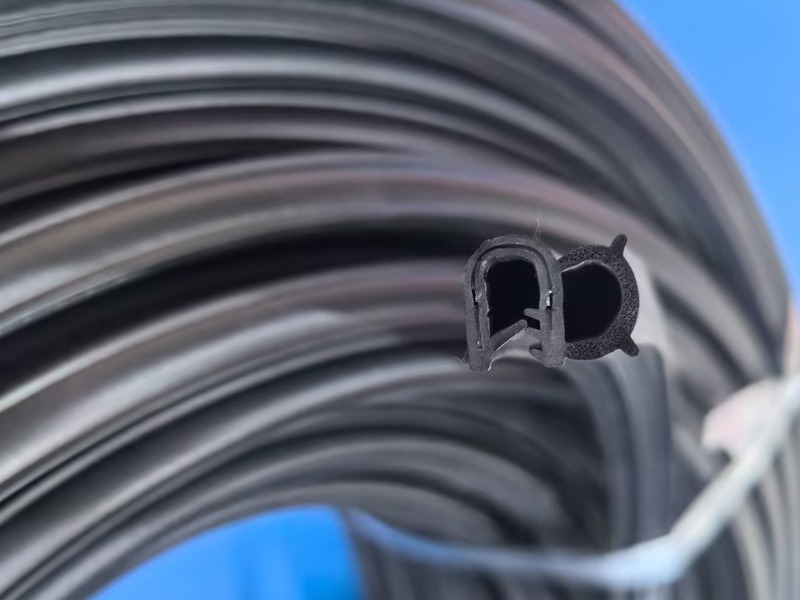
Industrial electrical enclosures, control panels, and generator canopies protect sensitive electronics and machinery from dust, water, oil, and corrosive agents. Meeting stringent IP (Ingress Protection) and NEMA standards depends heavily on the quality and material selection of the rubber door seal lining the access panels.
Meeting IP and NEMA Ingress Protection Standards
Enclosure seals must maintain continuous sealing pressure around corners and door latches. EPDM rubber profiles—available in edge-trim, bulb, and D-section configurations—compress uniformly to prevent dust (IP6X) and water jets (IPX5/IPX6) from entering sensitive internal compartments.
Dense vs. Cellular EPDM for Enclosures
- EPDM Dense Rubber:Ideal for high-impact edge protection, mechanical locking channels, and locations subject to physical scuffing or chemical washdowns.
- EPDM Cellular Rubber:Perfect for lightweight access doors and removable panels requiring high compressibility to seal against uneven cast or welded metal flanges.
- Combination Profiles:Provide the ultimate locking grip combined with a soft sponge sealing gasket.
Chemical and Environmental Resistance in Industrial Plants
Industrial facilities often expose equipment to cleaning chemicals, humidity, and temperature swings. EPDM’s resistance to water, mild acids, and steam makes it superior to standard neoprene or PVC in many factory environments.
Custom Extrusion and Adhesive Backing Options
Many industrial cabinet seals are manufactured with pressure-sensitive adhesive (PSA) backing for quick, peel-and-stick installation. Custom profiles can also be spliced, corner-molded, or cut to exact lengths to form continuous gasket frames.
Protecting valuable industrial equipment starts with robust sealing. Specifying high-grade EPDM dense and cellular rubber gaskets ensures long-term compliance with NEMA and IP standards, safeguarding operations against costly downtime.