
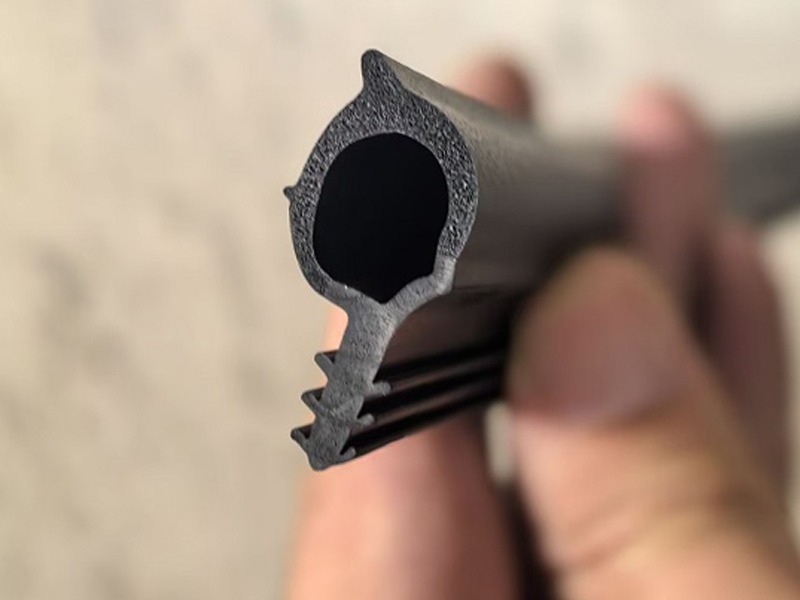
Rubber door seals are critical components across automotive, marine, construction, and industrial enclosures. Selecting the right material directly impacts weather resistance, acoustic insulation, compression set, and longevity. Among all available elastomers, Ethylene Propylene Diene Monomer (EPDM) stands out as the industry gold standard. However, engineers and procurement managers must choose among three distinct configurations: EPDM dense rubber, EPDM cellular rubber, and combination rubber seals.
EPDM Dense Rubber Seals: Maximum Durability and Wear Resistance
EPDM dense rubber features a solid, non-porous structure. It provides exceptional tensile strength, tear resistance, and mechanical robustness. Ideal for high-friction or high-wear environments, dense EPDM withstands heavy physical impact, UV radiation, ozone degradation, and extreme temperature fluctuations (-40°C to +120°C). It is commonly used where structural integrity and water/air barrier performance are paramount under mechanical stress.
EPDM Cellular Rubber Seals: Superior Compression and Cushioning
Also known as sponge rubber or expanded EPDM, cellular rubber incorporates microscopic closed or open cells trapped within the polymer matrix. This structure makes EPDM cellular rubber extremely lightweight, highly compressible, and soft. It excels at conforming to uneven mating surfaces, absorbing vibrations, and providing airtight and watertight seals with minimal closure force. It is widely used in automotive door weatherstrips, HVAC gaskets, and enclosure seals.
Combination Rubber Seals: The Best of Both Worlds
Combination seals (co-extruded or dual-duplex profiles) fuse EPDM dense rubber and EPDM cellular rubber into a single continuous profile. The dense rubber section provides a rigid, stable base for mechanical retention—such as clip-on mounting or slide-in channels—while the cellular rubber bulb or sponge section delivers a soft, compressible sealing surface. This synergy solves the engineering dilemma of achieving secure attachment combined with effortless door closure and maximum sealing performance.
How to Choose the Right Rubber Door Seal for Your Application
When evaluating your project requirements, consider factors such as:
- Closure Force:If low door-closing effort is needed, lean toward cellular or combination profiles.
- Mechanical Stress & Mounting:If the seal must grip a metal flange or withstand abrasion, dense EPDM or the dense backbone of a combination seal is necessary.
- Environmental Exposure:All EPDM variants offer excellent UV and ozone resistance, making them perfect for outdoor use.
Understanding the nuances of EPDM dense rubber, EPDM cellular rubber, and combination seals empowers engineers to optimize product performance and cost. Partnering with a reliable custom rubber extrusion manufacturer ensures precise profile design, tailored durometers, and long-lasting sealing solutions for your global applications.