by admin admin No Comments

Fireproof Rubber Seals, D-shaped Sponge Gaskets, Extrusions for Automotive, Cabinets, Mass Transit

Hebei Shida Seal Group manufactures fireproof rubber seals, gaskets, profiles, extrusions, window and door seals for automotive, cabinets, enclosures, and mass transit industries. 

Our fireproof rubber seals are made for cars, buses, trains, trucks, ships, and boats, these interior and exterior vehicle components use fireproof materials that meet industry standards and fire protection specifications.

Fire Retardant EPDM Sponge D-shaped Seal

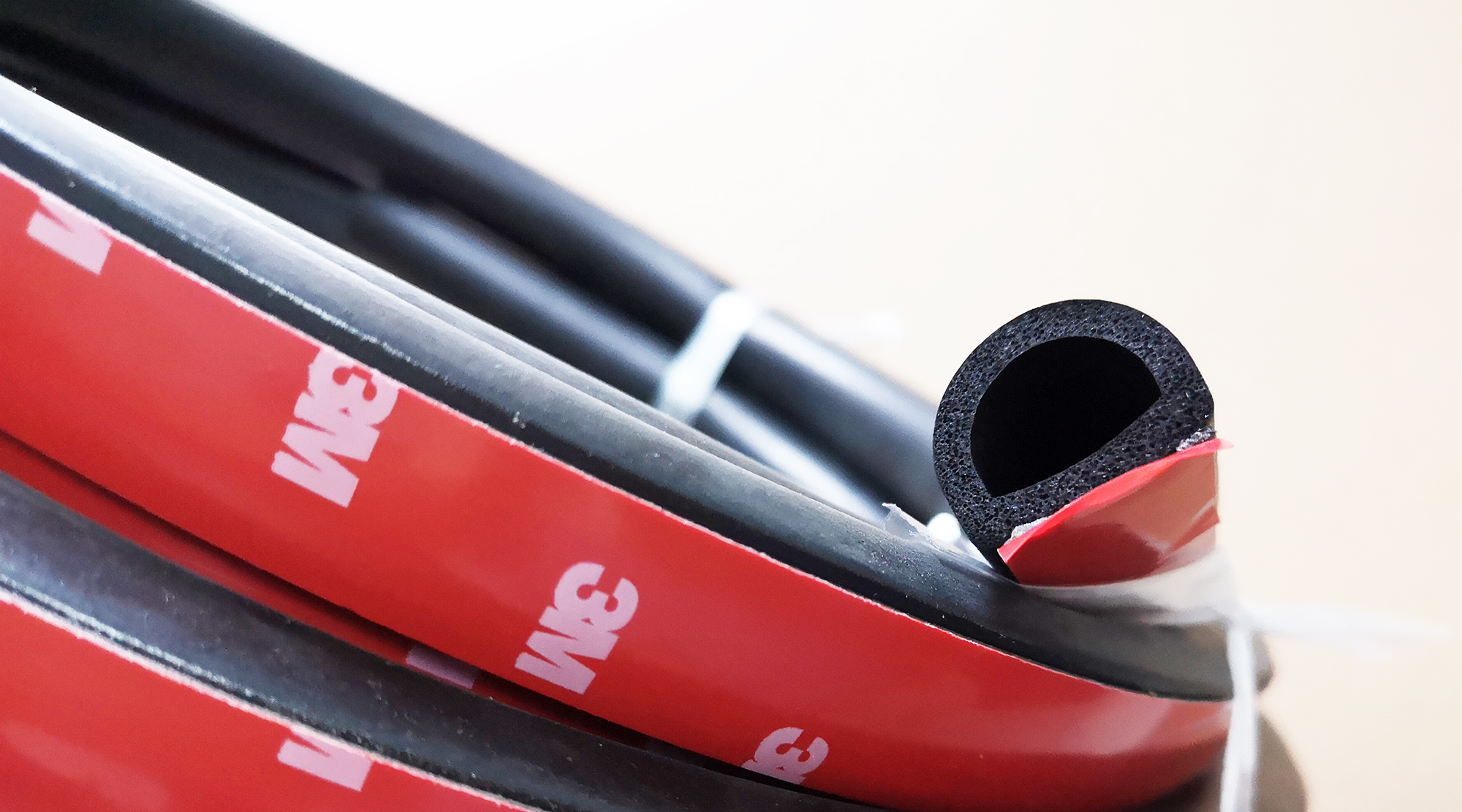
Description: D-Shaped EPDM Sponge Rubber Seal (Gasket) 3/4″W x 9/16″D with 3M Adhesive Strip 4229P

Seal Height: 9/16″

Seal Width: 3/4″

Ozone resistant EPDM sponge rubber

3M™ 4229P tape system with peel-off liner

Recommended temperature range of -20°F through +150°F

Excellent resistance to water absorption, ozone, sunlight aging, low temperature, and compression set

Optimum compression is 25%

Recommended maximum compression 25%-40%

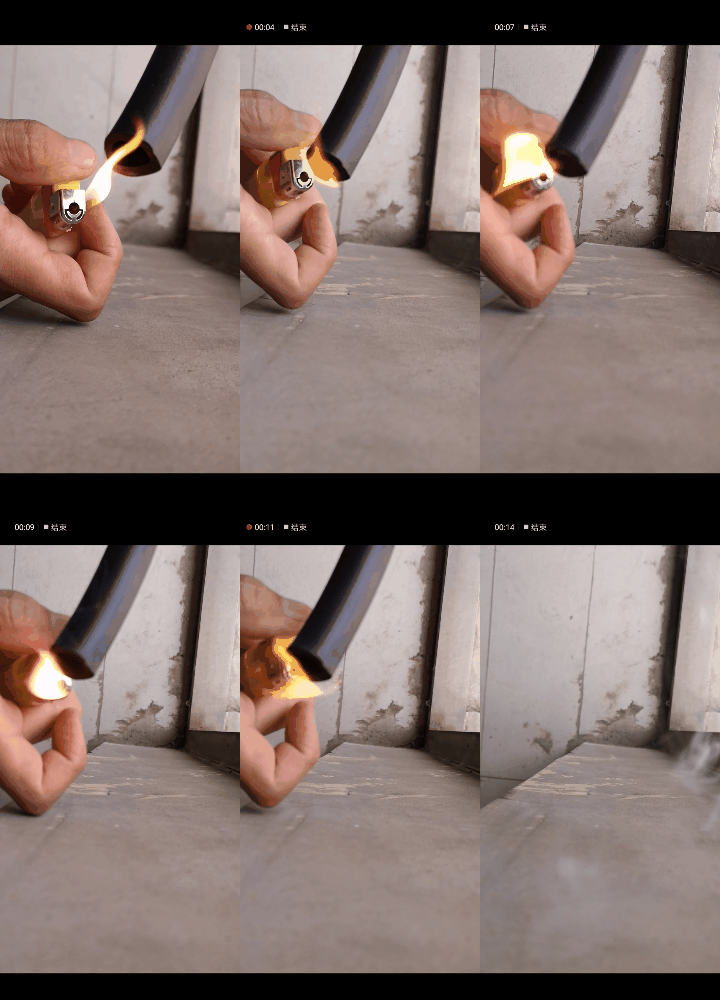
Our fireproof rubber seals meet FMVSS 302 – Flammability of materials used in the occupant compartments of motor vehicles. FMVSS 302 from the U.S. National Highway Safety Traffic Administration (NHTSA) specifies burn resistance requirements for materials used in occupant compartments. Technically equivalent to ISO 3795 and ASTM D5132-04, FMVSS 302 applies to buses, trucks, passenger cars, and multi-purpose passenger vehicles. 

Fire Retardant Rubber Seal

Fire Retardant Rubber Seal

by admin admin No Comments

Slip Coat, Flocking, Tape, or Attachment: Which to Choose for Extruded Seal?

Slip Coat

slip coat is a coating applied to the surface of a seal in order to reduce abrasion and increase seal life. Usually slip coating is applied to glass run channel and other dynamic seal applications. The job of the slip coat is to keep the seal working – allowing, for example, a glass window to move in and out – while not scuffing or marring the material running in and out of its channels. Slip coats keep seals from being harmed by cleaning products, they don’t fade over time, and generally are weatherproof.

Flocking

Flocking is similar to slip coating but has a definite look and texture. The process involves applying a flocking spray or flocking powder to the surface of the seal to insulate, absorb water, dampen vibration, and reduce friction. Most flocking is black because the seal it is attached to is also black. Flocking is found in auto windows – and in many other applications demanding weatherproofing of some sort.

Tape

Tape is a means of attaching a seal to another surface. Usually the seal is manufactured with an adhesive side affixed in place on the seal and a second adhesive side protected by a covering which is removed during a later stage of the manufacturing or assembly process.

Attachment

seal attachment includes adhesives and mechanical fasteners. Both are meant to join a seal to another surface and each as its pro’s and con’s. Adhesive attachments (including tape) can be temporary or permanent and may work in conjunction with mechanical fasteners. Mechanical fasteners include wire carrier seals, kerf insertions, multi-durometer extrusions, and push-pin seals, one of the most common in the auto industry.

by admin admin No Comments

Extruded Seals Terminology

  • Blooming: A phenomenon that occurs when compounding agents in rubber migrate, or bloom, to the surface, causing a dusty or milky looking film. This is due to the agents’ limited compatibility with the rubber elastomer and affects the tensile strength, adhesion properties, and appearance of your part.
  • Slipcoat: A non-drip lubricant applied to the surface of seals to reduce friction and increase surface smoothness and abrasion resistance.
  • Flock tape/spray: An adhesive tape or with a non-woven coating on one side or an adhesive non-woven spray that is used to reduce friction between two surfaces or reduce reflection.
  • Hollow: A hollow area, usually ¼” to 5” in diameter, in a profile design made by placing a pin or mandrel inside the die.
  • Durometer: A measurement usedto indicate the hardness of a material, defined as a material’s resistance to permanent indentation.
  • Compression set: The permanent indentation remaining when a force that was applied to a material is removed. There are two ways to measure compression set: Compression set A measures the materials thickness before and after pressure is applied. Compression set B measures the material thickness after the material is compressed to 25% of its original height.
  • Insertion/extraction forces: The forces applied to the seal during assembly and disassembly in its final application.
  • Insert molding: Molding one material (plastic) around another (metal) such that the final component is single unit with reduced assembly and labor costs, reduced the size and weight of the part, improved component reliability, and improved part strength and structure with enhanced design flexibility.
by admin admin No Comments

PVC Edge Trim

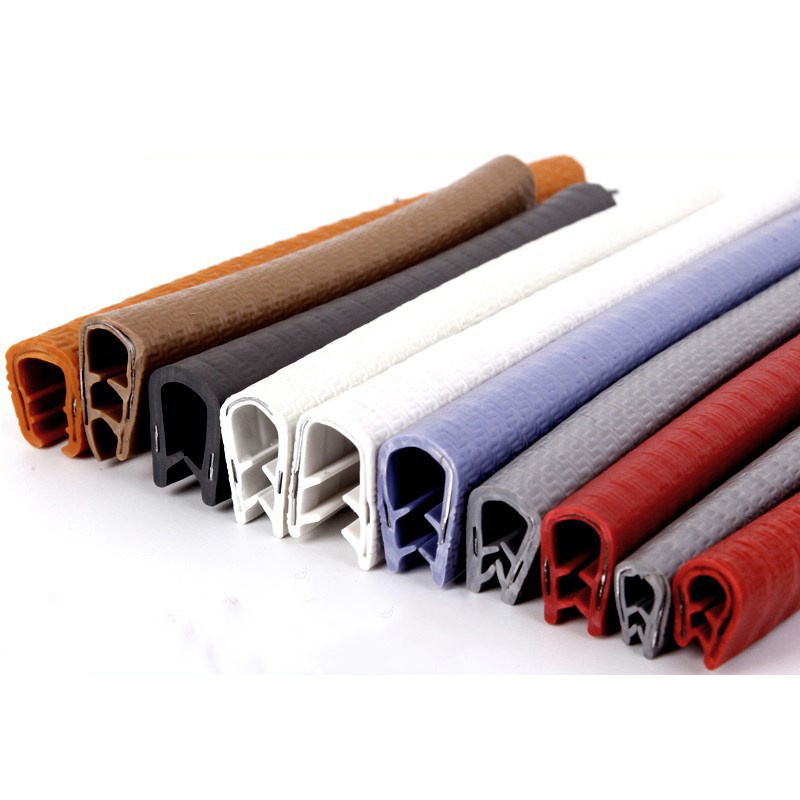
Hebei Shida Seal Group manufactures plastic extrusion, edge trims, rubber edge trim, plastic edge trim, rubber bulb seals & extruded rubber sponge seals, extruded seals and gaskets, door edge guards, lip trim, lip trims, flexible edge trim, edge trims, decorative trim, decorative trim for boats, trucks, cabinets.

by admin admin No Comments

Manhole Cover Gaskets

Manhole Cover Gaskets

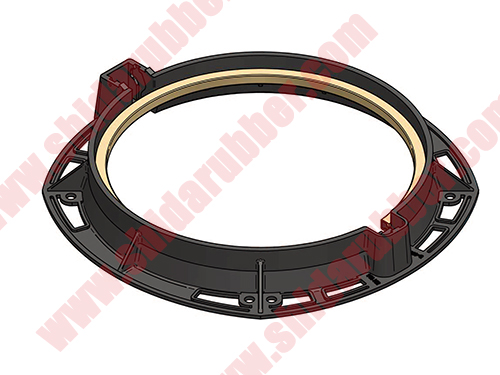
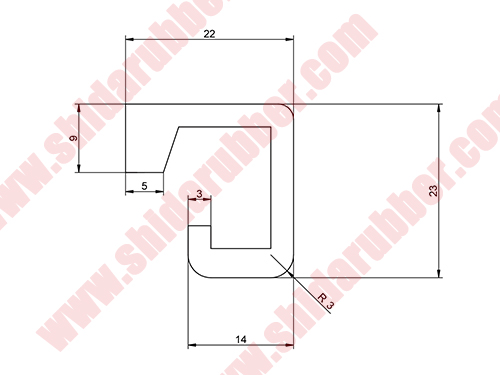
Hebei Shida Seal Group now manufactures high-quality EPDM rubber gaskets for manhole cover, lid and frame. The manhole cover gaskets are jointed at the ends to create great sealing performance.

Our rubber manhole gaskets can be produced out of any desired rubber grade. The gaskets can be supplied in different shapes. Also in large dimensions. The manhole seals are suitable for various applications, such as the maritime and offshore industry. But also in heated water installations, dryers and hot air systems.

Manhole Cover Gasket Manhole Cover Gasket Manhole Cover Gasket


by admin admin No Comments

Global expansions set firm foundation for Boge Rubber

DAMME, Germany—Boge Rubber & Plastics Group had a busy 2017, expanding in all regions of the world.

The automotive supplier of rubber and plastic parts opened its first production facility in Mexico, its second site in China and a second production hall in Slovakia.

All of the moves are in response to increased business from major automotive original equipment manufacturers, which the company has had more freedom to chase since being sold to China’s Zhuzhou Times New Material Technology (TMT) by ZF Friedrichshafen A.G. in 2014.

“As a global supplier, we have to follow our customers,” Boge CEO Torsten Bremer said. “Our customers invest into new sites in emerging markets for two reasons: to make the cost balance better and to exploit these growth markets. These two reasons are the same for us. It’s not just following what we did before, we’re expanding our footprint as well as we expand our portfolio with a new degree of freedom from when we were spun off from ZF. Our new shareholder gives us a lot of freedom to look for new applications of our competencies. We’re not limited to automotive. Even though we’re doing more than 95 percent automotive today, we can look into other businesses and expand our lightweight composite material portfolio.”

That material portfolio focuses on two main areas: parts for rubber-to-metal bonding applications and plastics. Its rubber-to-metal business accounts for about 83 percent of its sales primarily focused on powertrain and chassis applications, the latter accounting for two-thirds of Boge’s overall sales.

While plastics only accounts for 17 percent, Bremer said that number has grown from 5 percent in the last five years.

“We are ready to change ourselves with the changes around us,” Bremer said. “As a mid-size supplier, we are not the ones to move the market. But we have to be fast followers of changes and we give our contributions to our main customers. We’re in very intensive talks on how we can help them to respond to the actual challenges.”

Follow the leader

In Mexico, Bremer said many of Boge’s Germany-based OEM customers had requested the supplier set up shop in the country. Once the firm secured a commitment from Mercedes, giving Boge an order if it set up shop, the firm pulled the trigger on a new manufacturing plant.

Now that Boge is there, the firm is receiving many more orders. The plant is about evenly split between rubber-to-metal parts and plastic components, but Bremer said in the past couple of months orders for plastic parts have picked up.

Based in San Luis Potosi, the plant spans 54,000 square feet with enough additional land to double in size if needed. Bremer said the operation is currently in the prototyping phase with the machines installed and employs about 15, but Bremer said once production starts in mid-2018 employment is expected to reach between 150 and 200.

He added that the plant also is capable of serving customers beyond Mexico in the NAFTA region.

“Right now all the orders we’ve received are for OEMs and Tier 1s in Mexico,” Bremer said. “We’ve been in NAFTA with our U.S. plant, but with the new installment of our OEM customers in Mexico, those customers need local content. This was the reason to go there, but it is our expectation to also offer out of that plant for the U.S. and other markets in the mid-term.”

Boge also services North America from its site in Hebron, Ky., and South America from its site in Sorocaba, Brazil.

Fast growth

Boge quickly outgrew its four buildings, spanning 301,000 total square feet, in Qingpu, China, which opened in 2008. It recently acquired a second building—based in Zhuzhou—of about 161,500 square feet from its parent company, which had used the site for its truck and bus business. The firm employs about 850 at Qingpu and 200 at Zhuzhou.

Bremer said the firm already is building a third plant, in Wuxi, that will also span about 161,500 square feet. Once completed it will be Boge’s 12th global location, also operating a site in Dingley, Australia, for the Asia-Pacific region.

Once the Wuxi plant is complete, Bremer said the firm will diversify the locations with Qingpu focusing on plastic parts and complex rubber/metal products like bushings and switchable engine mounts.

Zhuzhou will focus mainly on the firm’s truck and bus business for rubber/metal parts. Wuxi will handle mass-produced rubber/metal parts because it will operate a compounding facility, which also will supply rubber to the other Chinese sites.

Bremer said the firm has grown at a 20 percent rate in recent years, but added that the overall market is slowing down and Boge is in a transition phase as some of its first-generation products are reaching the end of their lifecycles.

Pushing limits

Boge has operated in Trnava, Slovakia, since 2000, one of five European facilities. Three others are located in Germany—Bonn, Simmern and Damme, its headquarters—and the other in Fontenay, France. The initial site, spanning 215,000 square feet, focused on standardized products, but the firm has since added plastics and hydraulic bushings among others to its portfolio.

The new production hall—a second building on the same site—spans 54,000 square feet with enough land for another expansion, something Bremer said the firm already is considering. The project created about 60 jobs and is projected to reach 120-150 total when at full capacity. Right now, Trnava employs 850 total.

“We have pushed more project launches into Slovakia and reached our capacity limits two years ago,” Bremer said. “With the strong expansion of our lightweight portfolio, we decided to build a second plant focused only on plastics. It will also reach its limit two years from now. We have many booked orders that we’re already thinking about the next expansion.

“Then we’d be reaching the limits. Not only space-wise, but in the western part of Slovakia it’s getting tougher and tougher to find experienced and well-educated employees. Unemployment rates are extremely low and a lot of automotive producers and their suppliers are still installing capacity.”

The new building only will produce plastics products, allowing the original building to focus on its rubber/metal products, which generates about $130 million in sales from that building.

“We want to diversify the plants and concentrate individual units on special portfolio parts depending on complexity and costs,” Bremer said.

by admin admin No Comments

Seasons Greetings from Hebei Shida Seal Group Team

Dear Customers,

As the Holiday Season is upon us, we find ourselves reflecting on the past year and on those who have supported and trusted us.
One of the real joys of this season is to say “Thank You” and to express our sincere appreciation for your support. 
We wish you a very happy Holiday Season and a New Year filled with happiness and prosperity.

Hebei Shida Seal Group Team

About Us:

Hebei Shida Seal Group is a custom manufacturer of  EPDM dense and sponge rubber extrusions, sealing profiles, EPDM rubber strips, seals and gaskets, automotive weatherstrips and seals, push-on trim seals, bulb trim seals, co-extruded trim seals, self-locking gaskets, self-sealing weatherstrips, wiring harness grommets, custom extruded and molded rubber products.

by admin admin No Comments

Automotive Rubber Parts

Hebei Shida Seal Group Co., Ltd. is a professional manufacturer and exporter of a variety of automotive rubber parts from Qinghe, Hebei, China.

We are your one-stop sourcing center of high-quality automotive molded rubber parts, weatherstrips, seals, extrusions, auto rubber parts, heavy truck rubber parts, rubber bushes, engine mounts, constant velocity and steering boot, drive shaft boots, automotive restoration rubber parts for GM, Mopar.

Automotive Rubber Parts