by admin admin No Comments

Toyoda Gosei to expand sealing plant in Mexico

Toyoda Gosei Co. Ltd. plans to expand its facility in Mexico with a $35.5 million investment in response to increased automotive demand in North America.

The firm said in an Aug. 25 news release that its subsidiary, Toyoda Gosei Automotive Sealing Mexico S.A. de C.V. in San Luis Potosí, Mexico, will increase weatherstrip production about 50 percent by 2020.

When the expansion is complete, Toyoda Gosei projects its work force will increase by 540. Employment currently sits at 910 as of March 31, and the company’s sales likely will grow to $124 million annually, up from $60 million, by 2020.

“The expansion is really just to help handle orders from our customers in Mexico who are increasing production,” a spokeswoman said. “There have been a lot of increases from the OEMs which has led to us needing to expand.”

In addition to adding capacity, the firm has acquired land adjacent to the building to add about 20 percent — or 82,000 square feet — to its current footprint, bringing the building to 523,100 square feet by 2020. Toyoda Gosei said this addition will be used to add trial manufacturing equipment to the facility, improving the pre-production processes. It also will provide additional team member training.

The San Luis Potosí plant produces opening trim weatherstrips, door weatherstrips and glass runs, among other weatherstrips, using both EPDM rubber and thermoplastic vulcanizate. The spokeswoman said the expansion will help serve Toyota, Ford and Honda, with more than half of the new production being exported to the U.S. market. New equipment will be installed at the site in phases as business dictates.

Construction is projected to be finished by November, the spokeswoman said. The trial manufacturing center will build prototypes, improve pre-production and help train new employees.

This is the second weatherstrip-related expansion the firm has made in the last four months. Toyoda Gosei revealed plans to establish a new facility in Bawal, India, projected to be operational in March 2017.

The new plant represents an $8.2 million investment, which includes constructing a 26,250-square-foot building, populating it with equipment and a 65,600-square-foot plot of land. The factory will produce air bags and rubber weatherstrips for Toyota, Honda and Maruti—a subsidiary of Suzuki Motor Corp.

It has been an active time for Toyoda Gosei in Mexico, where part of its goal is to triple its sales in the country by 2020. The spokeswoman said the firm reported about $98.4 million in Mexican sales for fiscal year 2015.

Recently, Toyoda Gosei opened a facility in Irapuato, Mexico. The plant represents a $53.2 million investment and will focus on the company’s interior/exterior business such as radiator grilles, console boxes and plastic parts in addition to its functional components business.

The firm said production of plated products is scheduled to start in the summer of 2017. It projects $110 million in sales for fiscal 2020, and the plant employs about 135. The building is nearly 400,000 square feet and rests on a 1.65 million-square-foot plot of land.

Toyoda Gosei operates two facilities in Matamoros City, Mexico—one for safety systems and the other for fuel components. Manufacturing for all four of the firm’s product lines are localized in Mexico.

Headquartered in Kiysou, Japan, Toyoda Gosei produces rubber and plastic automotive parts with 100 plants and offices in 18 countries.

About Toyoda Gosei

Established in 1949 and headquartered in Kiyosu, Aichi Prefecture, Japan, Toyoda Gosei is a leading specialty manufacturer of rubber and plastic automotive parts and LEDs. Today, the Toyoda Gosei group provides a variety of high-quality products internationally, with a network of approximately 100 plants and offices in 18 countries and regions. Through its flexible, integrated global supply system and leading-edge technologies for automotive safety, comfort, and environmental preservation, Toyoda Gosei is a global supplier that aims to deliver the highest levels of quality, innovation, and satisfaction to customers worldwide.
by admin admin No Comments

Cabot Corporation to Introduce Reinforcing Materials for Weather Stripping Applications in Asia

Cabot expands current portfolio with high performance carbon blacks for automotive weather stripping

SHANGHAI & BOSTON–(BUSINESS WIRE)–Aug. 29, 2016– Cabot Corporation (NYSE: CBT) recognizes that the continued development of the automotive market in China has driven increased sophistication in automotive rubber part applications. As a result, Cabot is introducing three carbon black products that are specifically designed for demanding weather stripping applications. SPHERON® 5000A carbon black, SPHERON® VHA carbon black and STERLING® SO-1 carbon black are now available immediately for all customers in China and the rest of Asia. These products supplement Cabot’s current portfolio to provide a full range of carbon blacks for weather stripping applications to meet high and standard surface quality requirements.

The rubber weather stripping on vehicles operates to keep a vehicle safe and secure. It lines the doors and windows to ensure they seal properly when closed, prevents water from leaking inside, protects the vehicle from the elements and reduces noise to improve ride quality. Weather stripping is a key consideration for car manufacturers when it comes to the overall aesthetics of a vehicle. In understanding the key requirements and complexities of rubber fabrication for weather stripping applications, Cabot offers a variety of carbon blacks to meet the needs of customers around the world.

Class A automotive weather stripping surface finishes demand a very low level of defects that could cause visible surface imperfections leading to rejected or scrap materials. In response to this market requirement, Cabot’s SPHERON®A carbon black series is engineered to deliver a very high purity level that results in excellent dispersion and reduced scrap rates for automotive parts manufacturers.

Cabot now offers two Class A carbon black products that combine the cleanliness of the SPHERON A series with optimized morphologies that reduce the visual imperfections on the surface of extruded rubber parts.

Cabot’s flagship SPHERON 5000A carbon black offers very good dispersion and allows excellent high speed processing, smooth extruded or calendered surfaces, and good dimensional stability. It is the product of choice for automotive weather stripping applications that require very high surface finish requirements.

SPHERON VHA carbon black is a newly developed, cost-effective product for very high surface finish requirements. It is ideally suited for applications that require both very low surface defects, without compromising reinforcement, and ultra-high frequency /microwave activity.

For extruded rubber product applications without Class A very high surface-critical requirements, Cabot provides a variety of products to fit customers’ needs. For automotive weather stripping parts with less stringent surface quality requirements, STERLING SO-1 carbon black is now available and offers fast compound processing and high extrusion speeds.

“China is one of the largest markets for industrial rubber products due to advanced technological developments in the automotive industry,” said Bart Kalkstein, president, Reinforcement Materials Segment. “We continually strive to not only meet but stay ahead of market demands. With the introduction of these carbon black products, we offer a full range of solutions that will improve the performance and aesthetics of our customers’ weather stripping products.”

Cabot’s full portfolio of high performance carbon blacks for automotive weather stripping available in China includes SPHERON® 5000A, SPHERON® VHA, SPHERON® SO, STERLING® SO-1 and SPHERON® 6400A carbon blacks. To learn more about Cabot’s products for weather stripping applications, please download the brochure.

ABOUT CABOT CORPORATION
Cabot Corporation (NYSE: CBT) is a global specialty chemicals and performance materials company, headquartered in Boston, Massachusetts. The company is a leading provider of rubber and specialty carbons, activated carbon, inkjet colorants, cesium formate drilling fluids, fumed silica and aerogel. For more information on Cabot, please visit the company’s website at: http://www.cabotcorp.com.

Safe Harbor Statement under the Private Securities Litigation Reform Act of 1995: Statements in the press release regarding Cabot’s business that are not historical facts are forward looking statements that involve risks and uncertainties. For a discussion of such risks and uncertainties, which could cause actual results to differ from those contained in the forward looking statements, see “Risk Factors” in the Company’s Annual Report on Form 10-K.

by admin admin No Comments

Mantaline Corporation Adds New Facility for Injection Molding and Thermoplastic Extrusion

New 30k Sq. Ft. Facility in Hiram Increases Capacity for High Tech Material Products

HIRAM, Ohio, Aug. 22, 2016 /PRNewswire/ — Mantaline Corporation has expanded its manufacturing capabilities by adding a new facility in Hiram, OH.  This addition, aptly named the Thermoplastic Extrusion and Injection Molding Innovation Center, enables the company to address a new set of requirements residing within the current customer base as well as creating a platform for growth.

“This facility permits us to blend a whole new set of materials with state-of-the-art processing,” said Tom Mlinar, Vice President of Business Development for Mantaline Corporation. “We are pleased to offer our customers new advances in thermoplastic injection molding and thermoplastic extrusion which will assist them as they compete in their served markets.”

The building is air conditioned building which assists in keeping materials and equipment moisture free. On the extrusion line a separate drying system to completely eliminate moisture from the raw materials is part of the overall manufacturing plan. The first of what will be several extrusion lines is outfitted with two new state-of-the-art quality assurance digital comparators. This permits associates the ability to monitor product being formed by three extruders in-line, in-process so that real time quality is “baked-into” the product.

The thermoplastic materials (TPE, TPV, and TPO) have many benefits including the ability to be formed economically in a wide variety of processes, color-matching, and re-cyclability. This material group is extremely environmentally friendly, which helps customers, such as auto-makers, reach their long term goals.

“With this facility we harness “best available” technology.  Our goal to deliver strategic componentry that enhances automotive safety and as well as improve the esthetic beauty to the end product,” explained Mlinar. “This facility allows us to work around the clock with new capacities and capabilities and add new products to our portfolio.”

The company expects to run two shifts immediately at the 30,000 square foot facility.  In addition, the site provides the venue for longer-term expansion; the building sits on an eight acre site.  The Hiram Plant is about 15 minutes from the company headquarters in Mantua, OH.

The mayor and council president were among the large group of attendees of local residents and associates on hand to celebrate the grand opening on August 17.

ABOUT MANTALINE CORPORATION

Founded in 1964, Mantaline is headquartered in Mantua, Ohio and currently employs about 175 associates. The company is a Tier 1 supplier to the global commercial vehicle market, especially heavy trucks, and a Tier 2 supplier to the automotive industry.

Mantaline Corporation is an employee-owned, world-class leader known for its engineering competence, quality and precision in the design, development, and production of precision molded and extruded components for a variety of industrial markets.  Recently this expertise has come to include materials of sophisticated thermoplastic formulations as well as an extensive variety of rubber and silicon materials.

For more information about Mantaline, visit their website at www.mantaline.com, call (800) 321-0948, or email[email protected].

Media contact: Chris Brown
Email
Phone: 330-656-9793

SOURCE Mantaline Corporation

Related Links

http://www.mantaline.com

by admin admin No Comments

Rubber Molded Corners

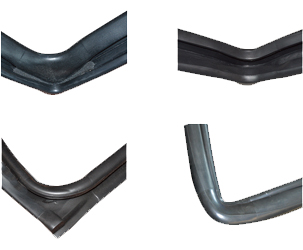
2016  Rubber Molded CornersHebei Shida Seal Group offers custom rubber molded corners to meet any customer’s specifications.  Rubber Molded Corners can be fabricated into a variety of configurations through molding, hot splicing, or cold bonding.  
 
Rubber Molded Corners yield the ultimate corner.  Rubber is injected under high pressure to bond the two pieces into a complete corner.
 
Hot splicing uses a similar method to molding.  However, hot splicing bonds the corner extrusions by “buttering” the ends with a liquid rubber adhesive and heat curing the parts into a complete corner.
 
Cold splicing seals the two end by applying an air cured adhesive to create a complete corner.
 
Typical applications are windshield weatherstrips, glass run channels for vehicles.
by admin admin No Comments

Hot Splicing / Vulcanizing

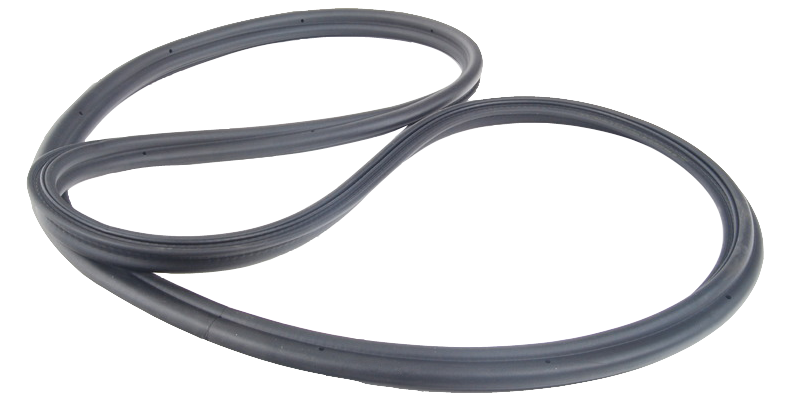
Splicing is a process where a material, usually an extrusion, is cut to length and bonded together to form an endless seal. Hebei Shida Seal Group utilizes both cold and hot vulcanization bonding techniques to produce spliced parts to customer specifications.
 
Uses the hot splicing/vulcanizing process to chemically bond two ends of a rubber extrusion together. By creating an endless seal, the rubber seal is more impermeable to the elements.  Hebei Shida Seal Group can vulcanize extruded rubber seals into circles and squares.
 
Luggage Weatherstrips
From vulcanized window seal, vulcanized frame seal, to spliced seals and vulcanized corners, we can manufacture the right endless rubber seal for your requirements.
by admin admin No Comments

Michigan Rubber receives GM supplier award

By Nick Green

CADILLAC — Michigan Rubber received a General Motors’ supplier award Wednesday for their high quality and standard of parts manufactured for the automotive company.

About 350 North American sites — a plant or operation where parts are produced — and 1,440 global sites receive the Supplier Quality Excellence Award each year.

Butch Bruce, Michigan Rubber general manager, said an on-going relationship with GM has helped keep employment numbers up, parts production high and kept the company striving to reach the next level of excellence.

“There is a high standard that GM sets,” Bruce said. “GM is creating new quality standards — we met those standards and maintained them for a year.”

Mark Vanderheyden, GM representative and award presenter, said that this is not an award that is given — it is earned.

“This award is given to the best of the best globally,” Vanderheyden said. “It is based on metrics, strictly objective and the strongest set of numbers win.”

Michigan Rubber is both a tier one and tier two supplier to GM, meaning they supply directly and indirectly via a third party.

Cindy Hamner, Michigan Rubber quality manager, worked tirelessly for this award and to achieve a Built in Quality Supplier accreditation, Bruce said.

“This award was a collaboration from everyone on the shop floor to senior staff,” Hamner said. “We worked and are working together to continuously improve our quality standards.”

A pre-audit for the BIQS accreditation was completed six months ago and Wednesday was the final audit carried out by GM.

Vanderheyden added that he always enjoyed visiting Cadillac and the plant. The continuous strive for excellence gets him excited for GM’s future and its suppliers, he said.

source: cadillacnews.com

by admin admin No Comments

Toyoda Gosei expands to South America, Mexico

SAO PAULO—Toyoda Gosei is growing its presence in South America and Mexico through multiple investments.

The firm has established its second Brazilian subsidiary, GDBR Industria e Comercio de Componentes Quimicos e de Borracha Ltda., at the company’s premises in Sao Paulo. Combined with its existing presence, Pecval Industria Ltda., the company has local production for three of its four core product groups.

GDBR President Makoto Hirako said the firm invested about $3.5 million in GDBR, which opened in April and employs about 260. The 194,000-sq.-ft. building is located on a 2.37 million-sq.-ft. plot of land. The new facility is Toyoda Gosei’s 24th in the Americas region.

“The South American automotive market can be expected to grow in the long term,” Hirako said. “Until now, the main South American market has been compact cars, but they can be expected to shift from compact cars to midsize cars. We’re expecting future demand.”

GDBR will produce automotive sealing parts such as door weatherstrips; interior and exterior parts such as instrument panel components; and safety systems such as air bags. Hirako said the facility utilizes EPDM to produce the weatherstrips, along with thermoplastic polyolefin and acrylonitrile butadiene styrene to produce some of the other components.

“We look forward to growing in Brazil, especially Itapetininga, with increasing localization to serve the needs of the Brazilian automotive market with its long-term growth potential,” Toyoda Gosei Chairman Tadashi Arashima said at the opening ceremony.

In a separate move, Toyoda Gosei said it is investing an undisclosed amount in its Pecval subsidiary. Pecval employs about 150 and produces interior/-exterior plastic parts at its 118,400-sq.-ft. facility.

Hirako said that the firm is not worried about the Brazilian market, despite its recent downturn. It projects the Brazilian economy will improve in the mid to long term, and as it does the company expects the automotive market to transition from compact cars to mid-sized vehicles.

“Their present economy is slow,” he said. “But in the mid- to long-term viewpoint, Brazil has a lot of potential for operation growth, natural resources and industrial presence. But right now the economy is very slow.”

The firm has localized production for three of its four product groups—automotive sealing parts such as weatherstrips and glass runs; interior/exterior plastic parts such as instrument panel components; and air bags. The company’s functional components line, which includes plastic fuel filler pipes, does not have manufacturing in the region yet. He said if a customer requests this line in the future, the company will consider establishing production in the country.

However, on May 16 the firm opened its previously announced Toyoda Gosei Irapuato Mexico S.A. de C.V.—located in Irapuato, Mexico, and fourth facility in the region. The addition gives Toyoda Gosei a manufacturing presence there for all four main product groups. The automotive supplier is one of numerous related firms announcing expansions in recent years, following many auto makers setting up new facilities in Mexico.

Irapuato represents a $53.2 million investment and will focus on the company’s interior/exterior business such as radiator grilles, console boxes and plastic parts in addition to its functional components business. Toyoda Gosei said production of plated products is scheduled to start in the summer of 2017. The firm projects $110 million in sales for fiscal 2020, and it employs about 135. The building is nearly 400,000 square feet, which rests on a 1.65 million-sq.-ft. plot of land.

Arashima said during the opening ceremony the company wants to grow together with its customers in Mexico and now can provide products from a location closer to its automotive business partners.

Toyoda Gosei operates two facilities in Matamoros City, Mexico—one for safety systems and the other for fuel components. The firm’s local automotive sealing facility is located in San Luis Potosi.

Headquartered in Kiysou, Japan, Toyoda Gosei produces rubber and plastic automotive parts with 100 plants and offices in 18 countries.

source: rubbernews.com

by admin admin No Comments

ChemChina to Acquire KraussMaffei Group for €925million

According to KraussMaffei, the transaction is subject to closing conditions including customary regulatory approvals. The transaction is expected to accelerate the growth of the company considerably in light of potential business synergies. ChemChina together with GUOXIN International Investment Corporation and AGIC Capital will make this acquisition.

ChemChina is a strategic and long-term oriented investor “With ChemChina, we have found a strategic and long-term oriented investor who has been interested in our Company for many years,” said Frank Stieler, CEO of the KraussMaffei Group. The KraussMaffei Group will continue to operate in its current corporate structure.

“We are strengthening our company with one of the leading global engineering groups, encompassing a 178-year corporate history. In doing so, we expect that KraussMaffei Group will maintain its identity and independence,” said Jianxin Ren, Chairman of ChemChina.

“We are investing in the Company’s strong management team and its technological expertise, which we believe will benefit our Chinese subsidiaries and position the chemical machinery business of ChemChina, which build and sell equipment for the rubber and chemical industry, to become a pioneer in achieving the ‘Made in China 2025’ program which aims to enhance Chinese industry. The growth potential of the KraussMaffei Group is tremendous, especially through improved access to the Chinese market, which we can make possible. We expect trends in the automotive industry towards advanced manufacturing and lightweight components will provide a huge development opportunity for the high-end plastic injection moulding industry. Together, ChemChina and the KraussMaffei Group will be well positioned for future growth,” added Ren.

“Following Onex’s acquisition in late 2012 KraussMaffei Group has achieved strong growth and had a very successful year in 2015. As part of ChemChina, we expect to considerably accelerate our growth strategy, especially in China and Asia, and to further strengthen the Company in Germany and Europe,” emphasised Stieler.

In China, the Company is expected to benefit in particular from the trend towards higher quality and sustainability. KraussMaffei explains, the machines and systems of its three brands – KraussMaffei, KraussMaffei Berstorff and Netstal – are especially suited to meet more challenging customer requirements. As a result of the transaction, the KraussMaffei Group will be able to accelerate its planned expansion in China.

“Accelerated growth will have a sustained positive impact for the Company globally. Our Company has a strong foundation and we will continue to build on our strengths, and create new jobs around the world,” said Stieler. “Our brands, KraussMaffei, KraussMaffei Berstorff and Netstal, will always stand for highest quality and sustainability.”

The KraussMaffei Group’s headquarters will remain in Munich and the operating and corporate responsibility for the Company will stay in Europe. This applies in particular to production, technology, patents as well as research and development. The KraussMaffei Group says it will continue to operate as a German company with a Supervisory Board based on co-determination. All existing collective agreements and location-based commitments will remain unchanged.

At present, the Company has approximately 4,500 employees globally, of which 2,800 are based in Germany. The Company intends to increase its workforce in 2016, including in Germany. Works council and IG Metall welcome the change in ownership The employee representatives and IG Metall welcome the planned change in ownership. “We consider the transaction as a significant opportunity for the KraussMaffei Group and its employees. We are confident that through further growth the existing jobs in Germany and Europe will be secured and expanded,” commented Peter Krahl, Chairman of the Works Council of the KraussMaffei Group.

IG Metall is also supportive of the change in ownership. “This change comes at the right time for the Company and offers a good perspective for further growth,” said Horst Lischka, Company Representative of IG Metall responsible for Munich and member of the Chairman’s Committee of the Supervisory Board of the KraussMaffei Group. “I am pleased that the German principle of co-determination is also enjoying greater appreciation abroad as a foundation for sustainable corporate success,” he added.

KraussMaffei explains that ChinaChem operates internationally and has a global expansion strategy, having acquired or invested in companies in Italy, France, Norway, the UK and Singapore in the last few years with the most recent acquisition being the high-end tire manufacturer Pirelli. When it comes to equity investments, ChemChina focuses on exceptional management expertise as well as the quality and value of the acquired companies. Following Onex’s acquisition in 2012 KraussMaffei Group says it has demonstrated sustained improvement in its financial and operational performance. In 2014, the Company generated revenues of approximately €1.1 billion and is expected to achieve year-on-year revenue growth of approximately 10 percent for 2015.

“We thank Onex for constructively supporting our Company over the last three years, which has allowed us to achieve record performance in 2015 and has positioned the Company well for the future,” commented Stieler. “Over the past several years we’ve worked closely with KraussMaffei Group’s management team to improve the performance of the company, further strengthening its leadership position in the global plastic and rubber processing industries,” said David Mansell, a Managing Director of Onex. “We’d like to thank all of KraussMaffei Group’s employees and management for their dedication and hard work,” added Mansell.


Source: NetComposites

by admin admin No Comments

Rubber Compression and Injection Molding Process

The basic rubber molding processes we utilize are compression molding and injection molding.

Compression Molding:

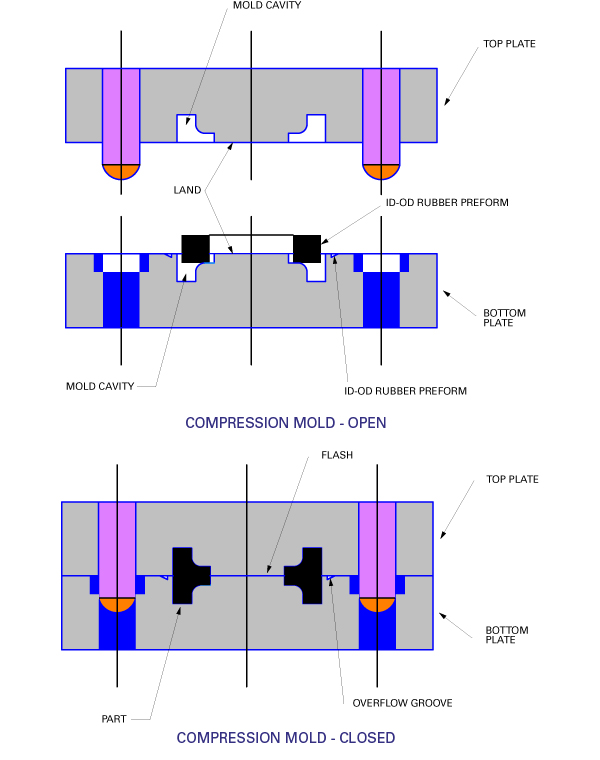
Compression molding is a process that involves taking a rubber compound or mixed raw material and creating “pre-forms” in the basic shape of the end product. The pre-forms provide a surplus of material to be placed in the cavity, thus ensuring a total cavity fill. Once in place, the mold is then closed, applying both heat and pressure to the pre-form and allowing it to fill the cavity. When the cavity is filled, excess pre-form material spills out into overflow grooves. Following this step the rubber is then demolded, usually by hand, leaving us with the molded rubber product.

Compression Molding Diagram

Compression Molding Diagram

Compression molding is often chosen for medium hardness compounds in low volume production or in applications requiring particularly expensive materials. This process helps to minimize the amount of overflow, or flash created during the rubber molding process.

In creating compression molded rubber products, the pre-forms can be difficult to insert into more complex mold designs. Furthermore, the compression molding process does not lend itself well to the material flow requirement of harder rubber compounds.

Benefits of Compression Molding:

  • Cost effective tooling
  • Maximized cavity count
  • Economical process for medium precision

Compression molding can be a cost effective solution in situations where:

  1. The tooling already exists
  2. The cross-section of the part is very large and requires a long cure time

Applications of compression molding range from simple rubber grommets to complex air intake hoses, Hebei Shida Seal Group can offer a variety of other molded rubber products through compression molding.


Injection Molding:

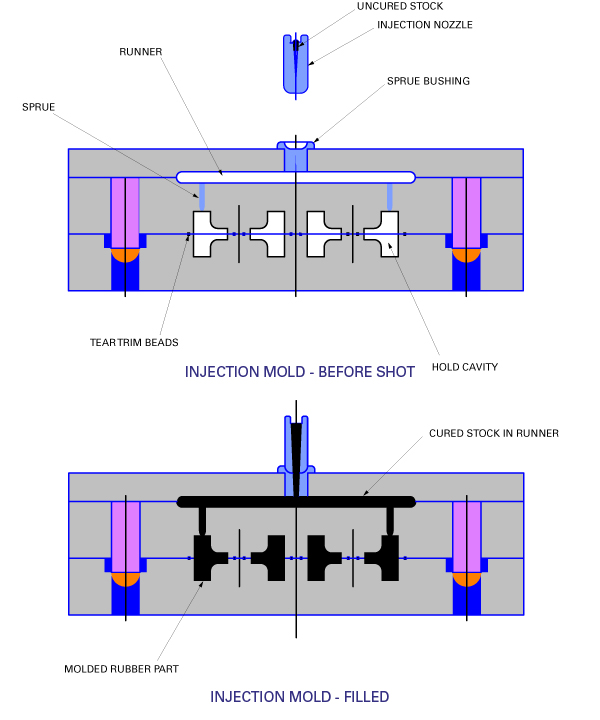
This process is the most efficient way to mold rubber in most cases. Injection and injection-transfer molding start with more efficient material preparation. The material is mixed, typically in 500-pound batches, and then stripped immediately after being mixed, into continuous strips measuring approximately 1.25″ wide and 0.375″ thick. This strip is fed into a screw on the injection molding machines, which charges a barrel as needed with a pre-defined amount of material. When the mold is closed, the material in the barrel is injected into the mold cavities and cured.

Injection Molding Diagram

Injection Molding Diagram

Advantages of injection molding:

  1. The complete elimination of pre-forms
    • The production and need for pre-forms is a labor intensive step that can potentially affect the finished product through variability in pre-form weight and shape.
  2. Elimination of operator placement of pre-forms.
    • Since pre-forms are eliminated, the need for operators to place the pre-forms in a cavity (compression molding) or pot (transfer molding) is removed.
  3. Injection screw pre-heats material before forcing it into cavities
    • This process decreases the viscosity of the material, allowing it to flow more easily into the cavities.
    • This pre-heating provides the potential for decreased cure times through
      1. More rapid cavity filling due to lower viscosity
      2. Material already being in the curing process through the heat added during screw charging and shear created during injection
  4. Reduced cycle time
  5. Flashless tooling
  6. Economical process for high volumes of medium to high precision components
  7. Capable of producing overmolded components
  8. Minimal material waste

About us:

Hebei Shida Seal Group is an ISO/TS 16949 accredited manufacturer of molded rubber products and extruded rubber products from Hebei, China. We are tier-2 supplier to Hyundai and Kia. Look no future than Hebei Shida Seal Group if you need molded rubber products of high quality!

by admin admin No Comments

Hutchinson strengthens position with Delta acquisition

Hutchinson S.A.’s Precision Sealing Systems unit is acquiring Danielson-based Delta Rubber Co., a manufacturer of high quality precision rubber components for the automotive, energy and industrial markets.

Terms of the transaction were not disclosed.

PSS operates a manufacturing facility in Baja, Calif., along with offices in Houston and Auburn Hills, Mich. The firm said in a statement that Danielson-based Delta Rubber brings a great opportunity to develop and manufacture some components closer to customers.

“This acquisition will further strengthen Hutchinson’s position in North America, offering its customers technological expertise in products and materials combined with a wider local presence,” Philippe Oliver, executive vice president of PSS activity, said in a statement.

Delta Rubber employs 65 at its Danielson plant and has been owned by NN Inc.—a diversified industrial company—since 2001.

Multitude of opportunities

“Joining Hutchinson returns us to the rubber industry on a global basis and presents a multitude of opportunities for growth and development for the company and its employees,” Jim Meagher, general manager of Delta Rubber, said in a statement.

NN said in a press release that its divestiture of Delta is part of its strategy to further align its plastics business, along with its recent acquisition of Precision Engineered Products.

“As outlined in our strategic plan, we continue to focus on balancing our portfolio of businesses to create a world class diversified industrial (company),” Richard Holder, NN president and CEO, said in a statement. “The divestiture of Delta Rubber was the next step in that process, as it further aligns our existing plastics business with our recent acquisition of Precision Engineered Products.”

According to NN’s website, the firm operated one other facility within its Plastic & Rubber Components unit—Caprock Manufacturing, located in Lubbock, Texas.

That plant is listed under the Precision Plastic Components Group.

According to NN’s third quarter SEC filing, the company completed its acquisition of Caprock in May for about $9 million in cash.

The unit in 2014 reported sales of $33.4 million, which represented 7 percent of NN’s $488.6 million revenues for the year.

Net sales for the third quarter increased $1.6 million to $11 million with income increasing to $600,000 compared to $200,000 in 2014.

NN said it will integrate Precision Engineered Products Holdings Inc. into the remainder of its Plastic & Rubber Components unit starting in the fourth quarter and rename the unit.

The firm’s deal to acquire Precision Engineered Products was finalized at the end of October. Holder said in a release that the acquisition is the largest in the company’s 35-year history.

Milestone purchase

The executive described the acquisition of Precision Engineered Products as “a transformational milestone that expands our market segment reach, broadens our portfolio of products, services and solutions, as well as expands margins and strengthens our global geographic footprint.”

Precision Engineered Products serves the medical, electrical, transportation and aerospace markets.

NN manufactures and supplies high precision metal bearing components, industrial plastic and precision metal components to a variety of markets on a global basis.

Headquartered in Johnson City, Tenn., NN has 42 manufacturing plants in North America, Western Europe, Eastern Europe, South America and China.

Hutchinson is a subsidiary of energy multinational Total S.A., based in Tour Total, France.

The unit manufactures vibration control systems, fluid management systems and sealing solution technologies with a focus on the aerospace, automotive and other industries.

Hutchinson generated $4.6 billion in 2014 revenues with more than 36,000 employees at 96 sites in 23 countries.